
Environmental stress can show up as dullness, uneven tone, dark spots, and visible signs of photoaging. A good routine needs more than an antioxidant, especially because ongoing ultraviolet exposure can continue driving pigment and skin aging.
Murad Environmental Shield is a collection built around brightening, antioxidant support, exfoliation, moisturization, and sun protection. Its current range includes several serums, cleansers, moisturizers, an eye product, and SPF formulas.
What interests me is the science behind that strategy. Vitamin C, glycolic acid, tranexamic acid, and sunscreen all have credible research, but the strength of evidence varies, and Murad does not disclose concentrations for many cosmetic actives.
Murad Environmental Shield Review: Quick Summary
- Product type: Multi-product facial skincare collection
- Main purpose: Brighten, smooth, protect
- Best for: Dullness, uneven tone, dark spots
- May not suit: Highly fragrance-sensitive skin
- Key ingredients or features: Vitamin C, glycolic acid, tranexamic acid, mineral SPF
- Return policy or guarantee: 60-day direct-purchase guarantee
- Overall rating: 4.0/5
Murad states that products purchased directly qualify for a 60-day money-back guarantee under its current return policy. Retailer purchases may follow different policies.
What Is Murad Environmental Shield?
Environmental Shield is a Murad skincare collection rather than one standalone formula. The current range is centered on products intended to address environmental stress, dullness, uneven tone, and signs of aging.
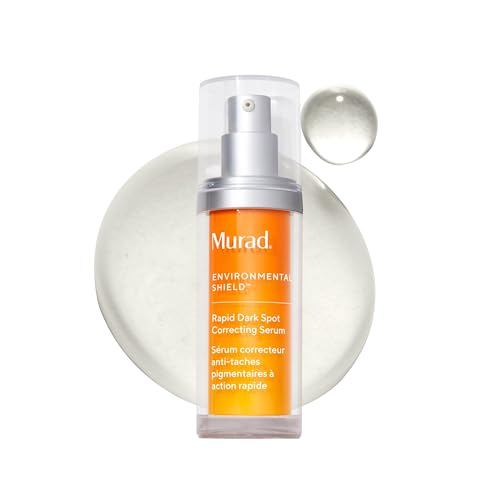
The collection includes brightening serums, cleansers, toner, moisturizers, eye care, and sunscreen. Current products include Vita-C Glycolic Serum, Rapid Dark Spot Correcting Serum, and City Skin SPF 50.
For this review, I use Vita-C Glycolic Serum as the main ingredient reference because it represents the collection’s antioxidant and exfoliating approach. Other Environmental Shield products use different formulas and should not be assumed identical.
What Does Murad Environmental Shield Claim to Do?
Murad’s current Environmental Shield claims include:
- Brighten dull-looking skin
- Improve uneven tone
- Reduce the appearance of dark spots
- Smooth rough-looking texture
- Defend against environmental stress
- Provide broad-spectrum sun protection
- Support healthier-looking, more radiant skin
The claims range from measurable sunscreen performance to broader cosmetic language. I find the brightening and exfoliation claims easier to evaluate scientifically than phrases about environmental defense.
Murad also reports product-specific clinical findings for Vita-C Glycolic Serum and Rapid Dark Spot Correcting Serum. Those findings are useful, but they come from relatively small company-sponsored product studies rather than large independent trials.
How Is Murad Environmental Shield Supposed to Work?
The collection combines several mechanisms. Vitamin C can act as an antioxidant and participate in pathways involved in collagen production and pigmentation. Glycolic acid loosens dead surface cells, improving texture and encouraging exfoliation.
Tranexamic acid has a different role in pigmentation. Clinical research suggests topical tranexamic acid can improve melasma, although formulations, concentrations, treatment duration, and study populations vary substantially.
Sunscreen works more directly by reducing ultraviolet exposure. That part has especially strong evidence because daily sunscreen has been shown in randomized research to slow visible skin aging.
Murad Environmental Shield Ingredients at a Glance
Because this is a collection, there is no single ingredient list. The most useful reference formula here is the current Vita-C Glycolic Serum.
Main ingredients:
- Vitamin C: Ascorbic acid and tetrahexyldecyl ascorbate
- Glycolic acid: Alpha-hydroxy acid exfoliant
- Phyto-luminescent extracts: Botanical extract blend
- Glutathione: Antioxidant
- Gold: Part of Murad’s stabilization system
Complete current Vita-C Glycolic Serum ingredient list:
- Water/Aqua/Eau
- Glycerin
- Caprylic/Capric Triglyceride
- Glycolic Acid
- Dimethicone
- HDI/Trimethylol Hexyllactone Crosspolymer
- Diisopropyl Sebacate
- C13-16 Isoparaffin
- Sodium Hydroxide
- Polyacrylate Crosspolymer-6
- Lactic Acid
- Dimethyl Isosorbide
- Ascorbic Acid
- Urea
- Yeast Amino Acids
- Trehalose
- Inositol
- Taurine
- Betaine
- Glutathione
- Tetrahexyldecyl Ascorbate
- Gold
- Marrubium Vulgare Extract
- Verbascum Thapsus Extract
- Zanthoxylum Bungeanum Fruit Extract
- Xymenynic Acid
- Terminalia Ferdinandiana Fruit Extract
- Chlorella Vulgaris Extract
- Hexylresorcinol
- Tocopheryl Acetate
- Tocopherol
- Cetearyl Isononanoate
- Oleyl Alcohol
- Butylene Glycol
- Polysilicone-11
- Triheptanoin
- Polyisobutene
- Ethylhexylglycerin
- Silica
- Hydroxyethyl Acrylate/Sodium Acryloyldimethyl Taurate Copolymer
- Sodium Surfactin
- Hexylene Glycol
- PEG-7 Trimethylolpropane Coconut Ether
- Sorbitol
- Xanthan Gum
- Decyl Glucoside
- Propanediol
- Sorbitan Isostearate
- 1,2-Hexanediol
- Leuconostoc/Radish Root Ferment Filtrate
- Tin Oxide
- Citric Acid
- Caprylyl Glycol
- Phenoxyethanol
- Sodium Benzoate
- Potassium Sorbate
- Mica
- Titanium Dioxide (CI 77891)
Murad notes that packaging should be considered the most accurate source because online ingredient lists can change.
Murad Environmental Shield Ingredients: Detailed Analysis
The most useful way to judge this collection is to focus on the ingredients that have the strongest connection to its advertised benefits.
Vitamin C
What stands out to me is that the serum uses both ascorbic acid and tetrahexyldecyl ascorbate. The latter is a more oil-compatible vitamin C derivative, while ascorbic acid is the biologically active form most extensively discussed in topical vitamin C research.
The broader evidence is moderate, with clinical studies supporting topical vitamin C for photodamage and pigmentation. Results depend heavily on stability, concentration, formulation, and delivery, as described in this topical vitamin C review.
Murad describes its gold-stabilized system as having greater antioxidant power, but the exact vitamin C concentration is not disclosed. That makes it impossible to determine whether the formula matches concentrations used in particular clinical studies.
Glycolic Acid
Glycolic acid is a well-established alpha-hydroxy acid that exfoliates the outermost skin layer. Human trials have found improvements in texture and discoloration, including with relatively low-strength daily formulations.
The evidence is moderate, but concentration matters greatly. A study using a particular glycolic acid concentration cannot automatically validate a product whose concentration is unknown. A relevant clinical trial illustrates why dose and formulation matter.
Murad says a slight temporary tingling sensation can occur. My concern is not the presence of glycolic acid itself, but that the undisclosed concentration makes individual tolerance harder to predict.
Phyto-luminescent Extract
Murad describes its phyto-luminescent extract as helping transform ultraviolet energy into visible light. That is an interesting formulation concept, but I find the evidence much less convincing than the research supporting sunscreen, vitamin C, or glycolic acid.
This ingredient should therefore be considered limited or indirect evidence, particularly because the commercial formula and its exact concentration are not independently characterized in the available clinical literature.
Other Ingredients
- Glycerin: Humectant that attracts water and supports skin hydration.
- Caprylic/Capric Triglyceride: Emollient that improves slip and softness.
- Dimethicone: Silicone that smooths skin and reduces moisture loss.
- Lactic Acid: AHA supporting exfoliation and hydration.
- Urea: Humectant that helps improve water content.
- Trehalose: Sugar-derived humectant and stabilizing ingredient.
- Glutathione: Antioxidant included for supportive formulation benefits.
- Tocopherol: Vitamin E antioxidant that helps protect the formula and skin.
- Butylene Glycol: Solvent and humectant.
- Polyisobutene: Texture and emollient ingredient.
- Silica: Texture modifier and absorbent.
- Xanthan Gum: Thickener and stabilizer.
- Decyl Glucoside: Mild surfactant used for formulation purposes.
- Sorbitol: Humectant that helps retain moisture.
- Phenoxyethanol: Preservative used to control microbial growth.
- Sodium Benzoate: Preservative supporting product stability.
- Potassium Sorbate: Preservative used against microbial growth.
- Mica: Mineral used mainly for optical effects.
- Titanium Dioxide: Mineral pigment used for appearance rather than as the sunscreen active here.
Does Murad Environmental Shield Have Effective Ingredient Amounts?
This is where transparency loses some points. Murad confirms that it does not disclose percentages for cosmetic actives in its high-performance formulas, including vitamin C in Vita-C Glycolic Serum.
The sunscreen is different because its FDA-regulated active ingredients are disclosed. City Skin lists 10% zinc oxide and 2.7% titanium dioxide, making its UV-filter disclosure considerably stronger than the serum’s active-ingredient transparency.
How Do You Use Murad Environmental Shield?
Directions vary by product. Vita-C Glycolic Serum is directed for morning and evening use after cleansing, followed by moisturizer and daytime sunscreen.
Rapid Dark Spot Correcting Serum is likewise directed for morning and evening application to the face, neck, and chest.
For exfoliating products, I would not interpret “daily” as permission to add extra acids or use larger amounts. New topical actives are best introduced cautiously, especially when your skin is reactive.
What Results Can You Realistically Expect?
The strongest expectation is improved brightness, smoother texture, and gradual reduction in the appearance of some pigmentation. Sunscreen can also help prevent further UV-driven deterioration, which is especially important for pigmentation-prone skin, according to AAD sunscreen guidance.
Murad reports that 91% of participants saw brighter, smoother skin after two weeks with Vita-C Glycolic Serum, while instrumental testing found 28% greater brightness at four weeks. The company study was small, so I would treat those figures as encouraging rather than definitive.
Ease of Use and Overall User Experience
The current formulas are designed as conventional leave-on skincare, so the main convenience advantage is routine integration. Murad’s own reviews frequently mention smooth application and quick absorption for Vita-C Glycolic Serum.
Consumer feedback is not uniformly positive. Some reviewers report lingering scent or pump issues, while others describe lightweight texture and easy layering. Those are reported experiences, not independently verified performance characteristics.
Safety, Side Effects, and Precautions
Glycolic acid can irritate sensitive skin, particularly when combined with other strong exfoliants. Murad itself notes temporary tingling with Vita-C Glycolic Serum. Fragrance is also present in some Environmental Shield formulas, which matters for people with fragrance sensitivity.
Patch testing is sensible when introducing a new leave-on product. Anyone with persistent burning, swelling, significant rash, or worsening pigmentation should stop the product and seek advice from a dermatologist or other qualified professional. Guidance from DermNet on cosmetic reactions supports this cautious approach.
Product Quality and Manufacturing Transparency
Murad provides complete online ingredient lists for its major products and clearly identifies regulated sunscreen actives. That deserves credit.
The weaker area is proprietary active-concentration disclosure. I would have more confidence in comparing the formulas with clinical studies if Murad provided exact cosmetic active percentages or stronger independent documentation connecting those concentrations with the finished products.
Customer Reviews and Common Complaints
Murad’s own current review sections show generally favorable ratings for the main Environmental Shield formulas. Vita-C Glycolic Serum has more than 500 listed reviews, while Rapid Dark Spot Correcting Serum has more than 600 on Murad’s site.
Ulta’s Rapid Dark Spot Correcting Serum page shows similarly positive overall feedback, but also includes complaints about lack of visible results, scent, tackiness, and perceived formula changes.
I would not treat these reviews as proof of effectiveness. Reviews are vulnerable to expectations, inconsistent use, sponsorship, and selection bias.
Murad Environmental Shield Pros and Cons
- Strong brightening ingredient choices
- Well-supported sunscreen strategy
- Complete online ingredient lists
- Broad range of product formats
- Direct-purchase money-back guarantee
- Many active concentrations undisclosed
- Fragrance may limit sensitive-skin suitability
Who Should Consider Murad Environmental Shield?
The collection makes the most sense for consumers seeking a structured routine around pigmentation, dullness, and environmental exposure.
- People targeting dull, uneven-looking skin
- Users who value antioxidant skincare
- Those wanting exfoliation plus brightening
- Sunscreen users seeking mineral protection
- Buyers comfortable with premium skincare formulas
Who Should Avoid Murad Environmental Shield?
The main issue is tolerance rather than a fundamental safety problem.
- People highly sensitive to fragrance
- Anyone reacting to glycolic acid
- Users already overloading their routine with acids
- People expecting prescription-level pigmentation treatment
- Anyone with unexplained skin changes needing diagnosis
Is Murad Environmental Shield Good Value for Money?
The collection’s value depends heavily on which product you choose. The strongest justification comes from formulas combining established actives with genuinely useful product design, particularly sunscreen.
I am less convinced when paying a premium for proprietary technologies that cannot be evaluated by disclosed concentration. A less expensive formula with transparent active levels may sometimes offer a clearer evidence-to-product match.
The collection also makes the most sense when you actually need several complementary functions. Buying multiple brightening products with overlapping actives is harder to justify than selecting one effective treatment plus dependable sunscreen.
Murad Environmental Shield: My Verdict
I consider Murad Environmental Shield worth considering, especially for people focused on dullness, uneven tone, and visible pigmentation who want a coordinated skincare range. The strongest parts are not the futuristic marketing claims, but the familiar evidence-based fundamentals: sunscreen, vitamin C, glycolic acid, and, in the dark-spot serum, tranexamic acid.
The main limitation is transparency. Murad supplies complete ingredient lists, but many cosmetic active concentrations remain undisclosed, making it difficult to judge whether individual formulas truly match studied levels. I also think fragrance and exfoliation reduce the appeal for highly reactive skin.
My overall view is favorable but measured: the collection has a credible scientific foundation, yet individual products should be judged separately. For most buyers, the best-supported benefits are brightening, smoother texture, and protection against ongoing UV exposure, rather than dramatic correction of every pigmentation concern.
Disclaimer
This review is based on current product information, ingredient analysis, available research, and consumer feedback discussed above. Results vary between individuals. This article is educational and does not replace personalized medical advice, diagnosis, or treatment.