
Fine lines, uneven texture, and visible sun damage are common reasons people consider retinol. The ingredient has genuine dermatological research behind it, but tolerance and formulation matter just as much as the headline ingredient.
La Roche-Posay B3 Retinol Serum combines pure retinol with niacinamide, glycerin, hyaluronic acid, and moisturizing ingredients. The manufacturer positions it for fine lines, wrinkles, premature sun damage, and sensitive skin, according to its current U.S. product information.
What interests me most is the gap between a credible retinol formula and the evidence specifically supporting this finished serum. Concentration, fragrance, irritation potential, regional formula differences, and independent testing all deserve a closer look before you decide.
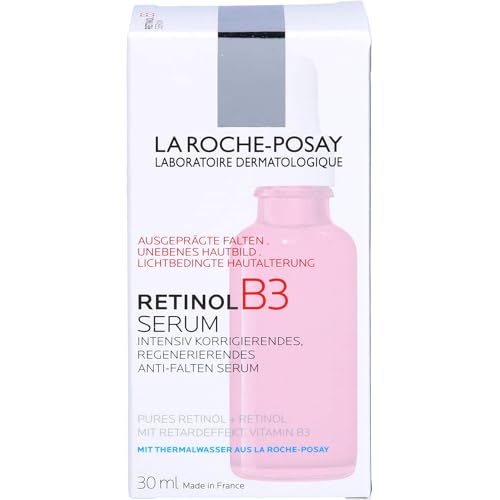
La Roche-Posay B3 Retinol Serum Review: Quick Summary
- Product type: Topical retinol face serum
- Main purpose: Fine lines, wrinkles, uneven texture
- Best for: Adults introducing retinol gradually
- May not suit: Very sensitive or irritated skin
- Key ingredients or features: Retinol, niacinamide, glycerin, hyaluronic acid
- Return policy or guarantee: Policy varies by market
- Overall rating: 3.5/5
The manufacturer provides product-specific usage and safety information on its U.S. page. For buyers outside the United States, I would check the local site because formulas and policies can differ.
What Is La Roche-Posay B3 Retinol Serum?
La Roche-Posay B3 Retinol Serum is a leave-on facial serum containing retinol, a vitamin-A derivative commonly used in cosmetic anti-aging products. It is designed for evening use on the face and neck while avoiding the eye area.
The formula includes niacinamide, glycerin, sodium hyaluronate, dimethicone, adenosine, retinyl palmitate, and tocopherol alongside retinol. The company positions it as a hydrating, sensitive-skin-friendly anti-aging serum.
One important regional difference stands out. The current UK product page specifies 0.3% retinol, while the U.S. page identifies retinol without stating a percentage. The UK formulation details therefore shouldn’t automatically be applied to a U.S. bottle.
What Does La Roche-Posay B3 Retinol Serum Claim to Do?
The manufacturer presents the serum as helping to:
- Reduce the appearance of fine lines.
- Reduce the appearance of wrinkles.
- Improve skin texture.
- Improve the look of premature sun damage.
- Increase visible radiance.
- Hydrate the skin.
- Support use on sensitive skin.
The company’s current UK page also describes the 0.3% version as clinically proven to firm, fill, and smooth sensitive skin. That language is more specific than simply calling the product an anti-aging serum.
I find the wrinkle and texture claims broadly compatible with retinol research. The sensitive-skin claim deserves more caution because retinol can itself cause redness, peeling, dryness, or irritation. The American Academy of Dermatology explains that gradual introduction can help reduce these problems.
How Is La Roche-Posay B3 Retinol Serum Supposed to Work?
Retinol is converted in the skin into more active retinoid forms. Retinoid activity can increase skin-cell turnover and influence collagen-related processes, which helps explain improvements in fine lines, uneven texture, and some signs of photoaging. The American Academy of Dermatology’s retinol guidance provides a useful clinical overview.
Niacinamide works through a different pathway and is associated with barrier support and other cosmetic benefits. A recent clinical evidence review describes topical niacinamide as having evidence for several skin benefits.
The mechanisms are biologically plausible, but that doesn’t prove this exact formula produces the same results as every retinol or niacinamide study.
La Roche-Posay B3 Retinol Serum Ingredients at a Glance
The current U.S. page provides a complete ingredient list. Because cosmetic formulas can change, I would still compare the bottle you receive with the manufacturer’s current ingredient information.
Main ingredients:
- Retinol
- Niacinamide
- Glycerin
- Sodium Hyaluronate
- Dimethicone
- Adenosine
- Retinyl Palmitate
- Tocopherol
Complete ingredient list:
- AQUA / WATER / EAU
- GLYCERIN
- CYCLOHEXASILOXANE
- ALCOHOL DENAT.
- PENTYLENE GLYCOL
- NIACINAMIDE
- DIMETHICONE
- GLYCINE SOJA OIL / SOYBEAN OIL
- PPG-6-DECYLTETRADECETH-30
- SODIUM HYALURONATE
- RETINOL
- ADENOSINE
- AMMONIUM POLYACRYLOYLDIMETHYL TAURATE
- CAPRYLYL GLYCOL
- CITRIC ACID
- TRISODIUM ETHYLENEDIAMINE DISUCCINATE
- XANTHAN GUM
- POLYSILICONE-11
- RETINYL PALMITATE
- TOCOPHEROL
- PHENOXYETHANOL
- PARFUM / FRAGRANCE
La Roche-Posay B3 Retinol Serum Ingredients: Detailed Analysis
The formula has two particularly relevant actives: retinol and niacinamide. Glycerin and sodium hyaluronate are also useful, mainly because they support hydration and comfort.
Retinol
Retinol is the ingredient with the strongest reason for using this type of serum. In a pooled analysis of six vehicle-controlled clinical studies, 0.1% stabilized retinol improved several signs of photoaging compared with the vehicle from week four through week twelve.
That evidence is encouraging, but it doesn’t establish that this finished serum performs identically. The studied product used a specific stabilized retinol preparation, and the U.S. formula doesn’t disclose its concentration.
My confidence is therefore strong for retinol as an ingredient, but only moderate for this exact finished product.
Niacinamide
Niacinamide is a vitamin B3 derivative used in skincare for barrier support, uneven tone, and other cosmetic benefits. A 2024 review of clinical evidence found meaningful support for several topical uses.
Research also suggests niacinamide can influence the skin barrier and reduce water loss. A controlled study examining topical barrier effects found changes in ceramides and other barrier lipids.
The formula doesn’t disclose its concentration, however. So although the ingredient is evidence-based, I can’t determine whether its amount matches any particular studied percentage.
Glycerin and Hyaluronic Acid
Glycerin is a humectant that helps hold water near the skin surface. Sodium hyaluronate is a form of hyaluronic acid used to support hydration.
Their inclusion is sensible in a retinol formula because maintaining hydration can make a routine more comfortable. I wouldn’t take their presence as proof that the product will prevent retinol irritation.
Other Ingredients
- Cyclohexasiloxane: Silicone used to improve slip and skin feel.
- Alcohol Denat.: Solvent that also influences formula texture.
- Pentylene Glycol: Humectant and formulation-support ingredient.
- Dimethicone: Silicone that smooths skin and reduces water loss.
- Soybean Oil: Emollient that conditions the skin.
- PPG-6-Decyltetradeceth-30: Helps solubilize and stabilize the formula.
- Adenosine: Skin-conditioning ingredient with cosmetic anti-aging evidence.
- Ammonium Polyacryloyldimethyl Taurate: Thickener and stabilizer.
- Caprylyl Glycol: Humectant and preservative-support ingredient.
- Citric Acid: Adjusts formula acidity.
- Trisodium EDDS: Chelating agent supporting formula stability.
- Xanthan Gum: Thickener and stabilizer.
- Polysilicone-11: Silicone-based texture and film-forming ingredient.
- Retinyl Palmitate: Vitamin-A derivative included at undisclosed concentration.
- Tocopherol: Vitamin E antioxidant and conditioning ingredient.
- Phenoxyethanol: Preservative with an established cosmetic safety assessment.
- Fragrance: Provides scent and may bother fragrance-sensitive users.
The European SCCS considers phenoxyethanol safe as a cosmetic preservative up to 1% under its assessed conditions. Safety assessment
Does La Roche-Posay B3 Retinol Serum Have Effective Ingredient Amounts?
This is where the formula loses some points for transparency. The U.S. listing identifies retinol but does not disclose its percentage.
The UK version clearly lists 0.3% retinol, as shown in the current UK ingredient information. I would not assume that percentage applies to a U.S. bottle.
Because concentration, stabilization, and delivery can affect retinol performance, the undisclosed U.S. amount limits how precisely the product can be compared with clinical research.
How Do You Use La Roche-Posay B3 Retinol Serum?
The U.S. manufacturer recommends 3 to 4 drops in the evening after cleansing, applied to the face and neck while avoiding the eye area. The directions say it can be used alone or under moisturizer, followed by daytime moisturizer and SPF. Official application directions
The UK directions advise starting once or twice weekly and gradually increasing frequency as the skin becomes accustomed to retinol. UK usage guidance
I consider gradual introduction sensible because irritation is one of the main practical limitations of retinol. I wouldn’t increase frequency beyond the label simply to chase quicker results.
What Results Can You Realistically Expect?
The most realistic expectation is gradual improvement in the appearance of fine lines, texture, and some signs of photoaging. Clinical retinol research supports these categories of improvement, but results depend on concentration, formulation, consistency, and individual skin response.
The manufacturer reports positive eight-week consumer-assessment results, but those company-reported figures aren’t the same as independent randomized evidence for the finished serum.
I would therefore expect modest, progressive cosmetic improvement rather than dramatic wrinkle removal. Consistent use over time matters more than applying a larger amount.
Ease of Use and Overall User Experience
The format is straightforward, with a small evening dose followed by moisturizer. The manufacturer describes the serum as lightweight and hydrating, although I have not personally tested its texture or absorption.
Consumer feedback on Ulta includes positive comments about smoother-looking skin and suitability for beginners, while other reviewers mention dispenser problems, odor, or irritation. These are reported user experiences, not controlled evidence.
One practical drawback is fragrance. That may be perfectly acceptable for many users, but people who deliberately choose fragrance-free skincare may prefer another retinol formula.
Safety, Side Effects, and Precautions
Retinol can cause dryness, redness, peeling, and irritation, particularly when introduced too rapidly. The American Academy of Dermatology recommends starting slowly and using sun protection.
The manufacturer advises avoiding retinol during pregnancy and breastfeeding. The AAD likewise advises avoiding retinoids during pregnancy. Pregnancy skincare guidance
Anyone with significant skin inflammation, persistent irritation, or known retinoid sensitivity should discuss use with a dermatologist rather than trying to push through a reaction.
Product Quality and Manufacturing Transparency
La Roche-Posay provides a complete U.S. ingredient list, directions, and safety information, which is useful from a consumer perspective. The company also makes dermatologist-testing and sensitive-skin claims on its product materials.
My main reservation is concentration transparency. The U.S. listing doesn’t give the retinol percentage, while the current UK version does. I would have more confidence in the U.S. formula if that active concentration were disclosed directly.
Customer Reviews and Common Complaints
Ulta currently displays hundreds of customer reviews. Positive comments commonly mention smoother-looking skin, glow, and beginner-friendly use, while critical reviews include reports of irritation, odor, and dispenser problems.
These reviews aren’t scientific evidence and can’t establish whether the serum works. Still, repeated practical complaints can be useful when evaluating convenience and tolerability. I would treat isolated extreme reactions cautiously because individual skin responses vary.
La Roche-Posay B3 Retinol Serum Pros and Cons
- Evidence-backed retinol ingredient
- Useful supporting moisturizers
- Complete U.S. ingredient list
- Straightforward evening routine
- Clear gradual-use guidance
- U.S. retinol percentage undisclosed
- Contains fragrance
Who Should Consider La Roche-Posay B3 Retinol Serum?
For appropriate adult users, the formula may suit people who:
- Want a conventional retinol serum.
- Prefer added moisturizing ingredients.
- Can introduce retinol gradually.
- Have realistic expectations about cosmetic results.
- Already use daily sun protection.
Who Should Avoid La Roche-Posay B3 Retinol Serum?
The product may not be a good choice for people who:
- Are pregnant or trying to become pregnant.
- Have significantly irritated or inflamed skin.
- Know they react poorly to retinoids.
- Prefer strictly fragrance-free products.
- Expect prescription-level results.
- Need individualized treatment for a skin condition.
Children and teenagers shouldn’t start an anti-aging retinol routine without guidance from a qualified healthcare professional.
Is La Roche-Posay B3 Retinol Serum Good Value for Money?
From a consumer perspective, you’re paying for a recognizable retinol formulation combined with niacinamide, humectants, silicones, and established cosmetic manufacturing.
The ingredient list is reasonably transparent, but the undisclosed U.S. retinol percentage makes it harder to judge exactly how much active retinol you’re receiving. That’s a meaningful limitation when comparing formulas.
I think the value is strongest for someone who specifically likes this ingredient combination and brand. If concentration transparency is your top priority, another serum that clearly states its retinol percentage may be easier to evaluate.
La Roche-Posay B3 Retinol Serum: My Verdict
I would rate La Roche-Posay B3 Retinol Serum 3.5 out of 5. The underlying concept is sound because retinol has credible evidence for improving signs of photoaging, while niacinamide and moisturizing ingredients are sensible supporting components.
The biggest weakness isn’t that the formula contains something alarming. It’s that the U.S. version doesn’t disclose its retinol percentage. That makes it harder to compare the actual product with published clinical concentrations.
My verdict is worth considering, particularly for an adult looking for a mainstream retinol serum and willing to introduce it gradually. I would keep expectations realistic, monitor irritation, use daytime sun protection, and check the exact regional ingredient panel before buying.
Disclaimer
This review is based on current product information, ingredient analysis, available scientific research, manufacturer information, and consumer feedback. Results vary between individuals. This article is educational and doesn’t replace personalized medical advice, diagnosis, or treatment.