
Sun exposure is one of the biggest contributors to premature skin aging, uneven pigmentation, and changes in texture. A daily broad-spectrum sunscreen is therefore more important than adding another complicated treatment step.
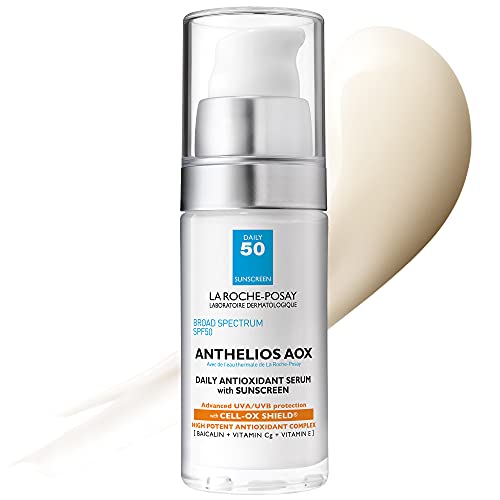
Anthelios AOX combines SPF 50 sunscreen filters with antioxidants in a serum-style face formula. That combination is appealing because it aims to provide daily UV protection while also supporting the appearance of fine lines, dark spots, and uneven texture.
The interesting question is whether the formula actually delivers more than ordinary sunscreen. I looked at the current U.S. ingredient list, the company’s claims, independent research, safety guidance, and consumer feedback to separate the well-supported benefits from the harder-to-prove ones.
La Roche-Posay Anthelios AOX Serum Review: Quick Summary
- Product type: Chemical facial sunscreen serum
- Main purpose: Broad-spectrum SPF 50 protection
- Best for: Daily facial sun protection and lightweight routines
- May not suit: Oxybenzone-sensitive or very reactive skin
- Key ingredients or features: Five UV filters, vitamin C derivative, vitamin E, baicalin-rich botanical extract
- Return policy or guarantee: 30-day direct-purchase returns according to La Roche-Posay
- Overall rating: 4.0/5
What Is La Roche-Posay Anthelios AOX Serum?
Anthelios AOX is a daily facial sunscreen formulated as a lightweight serum. The current U.S. version provides SPF 50 broad-spectrum protection and is intended for routine facial use, either alone or beneath makeup. The official product page describes it as fragrance-free, oil-free, non-comedogenic, and allergy tested.
The formula combines five sunscreen actives with antioxidant ingredients, including tocopherol, ascorbyl glucoside, and Scutellaria baicalensis root extract. It is marketed for concerns including sun damage, fine lines, wrinkles, dark spots, texture, and radiance. La Roche-Posay’s claims also reference a 12-week clinical study.
What distinguishes it is the attempt to combine sunscreen and antioxidant skincare in one product. I see that as a practical design choice rather than proof that it can replace every treatment serum.
What Does La Roche-Posay Anthelios AOX Serum Claim to Do?
The company’s main claims are:
- Provide broad-spectrum SPF 50 protection.
- Help defend skin against UV-related oxidative stress.
- Improve the appearance of fine lines and wrinkles.
- Improve the appearance of dark and sun spots.
- Improve skin texture and radiance.
- Provide a lightweight finish suitable for sensitive skin. These claims appear on the current product page.
The sunscreen claim is specific and testable. The cosmetic anti-aging claims are also more specific than vague promises such as “transforms your skin.” Still, the antioxidant benefits depend partly on ingredients whose concentrations aren’t disclosed.
I find the claims reasonably restrained overall. The important distinction is that a 12-week clinical study supports the finished product’s appearance claims according to the manufacturer, but the publicly available page does not provide enough methodological detail to independently judge that study’s strength.
How Is La Roche-Posay Anthelios AOX Serum Supposed to Work?
The sunscreen filters absorb incoming UV radiation before it can cause as much cellular damage. The current formula uses avobenzone, homosalate, octisalate, octocrylene, and oxybenzone at disclosed concentrations. The FDA sunscreen monograph recognizes these as established sunscreen active ingredients within specified concentration limits.
The antioxidant side is different. Vitamin C derivatives and vitamin E can help neutralize reactive molecules involved in oxidative stress, while botanical extracts may provide additional antioxidant activity. That mechanism is biologically plausible, but it doesn’t automatically prove noticeable anti-aging effects from this particular formula.
The strongest evidence therefore belongs to sunscreen itself. I am less convinced when antioxidant mechanisms are presented as though they independently establish the same clinical benefits.
La Roche-Posay Anthelios AOX Serum Ingredients at a Glance
The following is the current U.S. formula listed by the manufacturer. The official ingredient panel provides exact percentages for the sunscreen actives but not the concentrations of the antioxidant ingredients.
Main active ingredients:
- Avobenzone: 2.68%
- Homosalate: 9.60%
- Octisalate: 2.88%
- Octocrylene: 5.38%
- Oxybenzone: 3.46%
Complete inactive ingredient list:
- Water
- Dimethicone
- Cyclopentasiloxane
- Tocopherol
- Acrylates/Dimethicone Copolymer
- Phenoxyethanol
- Propylene Glycol
- Caprylyl Glycol
- Silica
- Sodium Polyacrylate
- Ascorbyl Glucoside
- Scutellaria Baicalensis Root Extract
- Acrylates/C10-30 Alkyl Acrylate Crosspolymer
- Disodium EDTA
- Diethylhexyl Syringylidenemalonate
- Polyacrylamide
- C13-14 Isoparaffin
- Laureth-7
- Cassia Alata Leaf Extract
- Maltodextrin
- Triethanolamine
La Roche-Posay Anthelios AOX Serum Ingredients: Detailed Analysis
The formula’s most important functional ingredients are its sunscreen filters. Among the secondary ingredients, vitamin C, vitamin E, and the botanical extracts deserve the closest examination.
Avobenzone
Avobenzone is a UVA-absorbing sunscreen ingredient. Its inclusion is important because SPF alone mainly reflects UVB protection, while broad-spectrum formulas must also address UVA wavelengths.
The current formula uses 2.68%, within the FDA monograph’s listed concentration range. FDA’s sunscreen information explains the role of sunscreen active ingredients in protecting against UV radiation.
Avobenzone can be less photostable on its own, but modern sunscreen formulations combine filters to improve overall stability. La Roche-Posay specifically describes its filter combination as photostable. I consider that combination more important than judging this ingredient in isolation.
Ascorbyl Glucoside
Ascorbyl glucoside is a vitamin C derivative rather than pure L-ascorbic acid. It is used in cosmetics because it can provide antioxidant activity while generally being easier to formulate than unstable pure vitamin C.
Topical vitamin C has moderate but not definitive clinical support for improving photoaging and pigmentation. A systematic review of vitamin C research found potential benefits but also emphasized the limited number and variability of studies.
The limitation here is important: the product does not disclose the percentage of ascorbyl glucoside. Research on other vitamin C formulations therefore cannot establish that this particular concentration produces the same effects.
Tocopherol
Tocopherol is vitamin E, an antioxidant commonly used in skincare formulas. It can help protect formulations and skin from oxidative processes and may support the skin’s lipid barrier.
There is some clinical and dermatological experience supporting topical vitamin E, although the evidence for meaningful anti-aging changes is considerably less impressive than the evidence supporting sunscreen itself. A dermatological review describes topical tocopherol acetate’s moisturizing and antioxidant roles.
I see vitamin E as a sensible supporting ingredient rather than a reason by itself to buy the product. Its concentration is undisclosed, so its contribution to the final result is difficult to quantify.
Scutellaria Baicalensis Root Extract
Scutellaria baicalensis contains flavonoids such as baicalin and baicalein with antioxidant and anti-inflammatory properties. Laboratory and animal research provides plausible reasons for including the extract in skincare.
However, the evidence is limited and indirect for routine cosmetic anti-aging use. For example, a topical safety study examined an aqueous extract in animal models rather than proving wrinkle or dark-spot benefits in people.
The manufacturer does not disclose the amount used here. I therefore would not treat the presence of this extract as clinical proof of a stronger antioxidant effect.
Other Ingredients
- Dimethicone: Silicone skin protectant that reduces water loss and improves slip; generally well tolerated.
- Cyclopentasiloxane: Volatile silicone that improves spreadability and a lighter skin feel.
- Acrylates/Dimethicone Copolymer: Film-forming texture agent that helps product feel and wear.
- Phenoxyethanol: Preservative used to limit microbial growth in cosmetics.
- Propylene Glycol: Humectant and solvent that helps maintain texture and ingredient distribution.
- Caprylyl Glycol: Humectant and preservative-support ingredient.
- Silica: Absorbent powder that can improve silky feel and reduce surface oil.
- Sodium Polyacrylate: Thickener and stabilizer that helps control consistency.
- Acrylates/C10-30 Alkyl Acrylate Crosspolymer: Thickener and texture stabilizer.
- Disodium EDTA: Chelating agent that improves formula stability.
- Diethylhexyl Syringylidenemalonate: Antioxidant and formulation stabilizer.
- Polyacrylamide: Texture and viscosity-control ingredient.
- C13-14 Isoparaffin: Emollient and solvent that contributes to texture.
- Laureth-7: Surfactant and emulsifier supporting formula consistency.
- Cassia Alata Leaf Extract: Botanical antioxidant and soothing-support ingredient.
- Maltodextrin: Carrier and stabilizing ingredient for certain botanical components.
- Triethanolamine: pH adjuster used to keep formulation acidity suitable.
Does La Roche-Posay Anthelios AOX Serum Have Effective Ingredient Amounts?
This is one of the formula’s clearer strengths and weaknesses.
The five sunscreen actives have exact percentages, which makes the SPF system substantially more transparent than a proprietary blend. Their listed levels fall within FDA monograph ranges. FDA’s monograph provides those permitted concentrations.
The antioxidant ingredients are different. Tocopherol, ascorbyl glucoside, and the botanical extracts are listed without percentages. Because effective topical concentrations vary by ingredient and formulation, I don’t think it’s responsible to label their amounts adequate or inadequate.
How Do You Use La Roche-Posay Anthelios AOX Serum?
The manufacturer directs you to apply it to the face 15 minutes before sun exposure and reapply at least every two hours. It should be the final step of a skincare routine when other products are used. The official directions also advise using a water-resistant sunscreen when swimming or sweating.
It can be worn alone or under makeup. I would treat the SPF as the primary purpose of the product rather than trying to stretch a small serum-like application over the face.
For broader protection, the American Academy of Dermatology recommends adequate sunscreen application and reapplication after swimming, sweating, or prolonged outdoor exposure.
What Results Can You Realistically Expect?
The most reliable expectation is protection from UV exposure when the product is applied correctly. SPF 50 is a meaningful level of protection, but no sunscreen eliminates every effect of sun exposure.
The manufacturer reports improvement in fine lines, wrinkles, texture, and dark spots after 12 weeks. That is encouraging, but I would interpret those results as modest cosmetic improvements, not dramatic reversal of established photoaging. Research on topical vitamin C also supports potential benefits, while showing meaningful variation between formulations. The systematic review evidence is useful context.
Ease of Use and Overall User Experience
The product’s serum-style design is probably its most practical feature. La Roche-Posay describes the texture as lightweight and suitable for use under makeup. The formula is also fragrance-free and contains silicones that can help create a smoother application. The manufacturer’s specifications support those points.
Consumer feedback broadly matches that description. On La Roche-Posay’s website, repeated reviews praise the light texture, lack of white cast, easy application, and compatibility with makeup. Some users also describe a dewy or slightly greasy finish, while a smaller number report irritation or rash. Those patterns are visible in the published reviews.
I would regard those reports as useful practical clues, not proof of universal performance.
Safety, Side Effects, and Precautions
The product is labeled dermatologist tested, allergy tested, and suitable for sensitive skin, but those terms do not guarantee that every sensitive person will tolerate it. The current formula contains oxybenzone, which the American Academy of Dermatology advises sensitive-skin users to avoid when it causes sensitivity.
Oxybenzone also remains under FDA review regarding its safety data for sunscreen use. FDA’s proposed sunscreen order does not establish it as definitively unsafe, but says additional data are needed for a positive GRASE determination.
Anyone with a known sunscreen allergy, significant facial sensitivity, or a history of reactions should discuss alternatives with a dermatologist. Stop use if persistent irritation develops.
Product Quality and Manufacturing Transparency
The ingredient labeling is a relative strength. The exact percentages of all five sunscreen actives are disclosed, and the complete inactive list is available from the manufacturer. The company also provides application directions and direct customer-service information.
Where transparency falls short is antioxidant dosing. I would have more confidence in the anti-aging story if the company disclosed concentrations or published the full methods and results of its 12-week finished-product study. The company does identify the product as dermatologist tested, fragrance-free, oil-free, and non-comedogenic.
La Roche-Posay’s U.S. direct-purchase policy allows returns within 30 days of purchase, with refunds to the original payment method. Its return information says purchases from other retailers must be returned to the original seller.
Customer Reviews and Common Complaints
La Roche-Posay’s product page currently shows hundreds of reviews, with an overall rating around 4.5 out of 5. Frequent praise centers on lightweight texture, lack of white cast, easy application, and comfortable daily wear. The published review pool also includes verified-purchaser feedback.
The less positive reports include greasiness, shine, slower absorption for some users, and occasional facial rashes. Similar texture discussions appear in older Reddit skincare threads, including reports of a dewy finish and differing experiences under makeup. Community feedback is useful for usability but shouldn’t be treated as clinical evidence.
I also give limited weight to isolated claims of dramatic anti-aging effects. Customer reviews can be biased, incomplete, or influenced by expectations.
La Roche-Posay Anthelios AOX Serum Pros and Cons
- Exact sunscreen percentages disclosed
- Broad-spectrum SPF 50 protection
- Fragrance-free formula
- Lightweight serum-style format
- Includes antioxidant ingredients
- Antioxidant concentrations aren’t disclosed
- Contains oxybenzone
Who Should Consider La Roche-Posay Anthelios AOX Serum?
I think the product makes the most sense for people who want dependable daily facial sunscreen without maintaining a separate antioxidant step.
- People wanting daily SPF 50 facial protection.
- Users who prefer lightweight sunscreen textures.
- Makeup wearers seeking a serum-like base.
- People interested in sunscreen plus antioxidants.
- Shoppers who value complete sunscreen-active disclosure.
Who Should Avoid La Roche-Posay Anthelios AOX Serum?
The product isn’t inherently unsuitable for sensitive skin, but some people may prefer a different filter system.
- People with known oxybenzone sensitivity.
- People whose skin routinely stings with chemical sunscreens.
- Anyone wanting fully disclosed antioxidant concentrations.
- People who strongly prefer mineral-only sunscreen filters.
- Anyone experiencing persistent irritation should discontinue use.
Is La Roche-Posay Anthelios AOX Serum Good Value for Money?
Value depends largely on whether you use the combination as intended. You’re paying for a facial sunscreen with a relatively sophisticated filter system, serum-style formulation, and added antioxidant ingredients rather than simply a basic SPF product.
I think the value proposition is strongest for someone who wants to consolidate sunscreen and antioxidant skincare into one morning step. The case is weaker if you already own a sunscreen you like and a well-supported antioxidant serum.
The lack of antioxidant percentages makes it harder to assign additional value to those ingredients. The documented sunscreen actives, practical format, and broad consumer satisfaction carry more weight for me.
La Roche-Posay Anthelios AOX Serum: My Verdict
I would rate Anthelios AOX 4.0 out of 5 and classify it as worth considering. The strongest part of the formula is the sunscreen system, not the marketing around its antioxidant complex. The exact UV-filter percentages are disclosed, the product provides SPF 50 broad-spectrum protection, and the serum format appears practical for daily use.
The anti-aging claims deserve more caution. The manufacturer reports a 12-week finished-product clinical study, which is more relevant than simply citing ingredient research. However, public details are limited, and the concentrations of the vitamin C derivative, vitamin E, and botanical antioxidants aren’t disclosed. That prevents a more rigorous assessment of their contribution.
From a consumer perspective, I think this is most appealing if you value a lightweight daily sunscreen that also contains antioxidant skincare ingredients. My main caveat is the oxybenzone-containing chemical filter system, particularly for people who already know their skin reacts to it. For everyone else, the product has a sensible core purpose and a reasonably strong evidence profile for what matters most: consistent sun protection.
Disclaimer
This review is based on current product information, ingredient analysis, available scientific research, safety guidance, and consumer feedback discussed above. Results vary between individuals. This article is educational and does not replace personalized medical advice, diagnosis, or treatment.