
Dark spots, post-acne marks, sunspots, and uneven tone can be stubborn, especially when pigmentation keeps returning. A useful brightening serum needs more than attractive ingredient names. It needs sensible ingredients, appropriate concentrations, and evidence that actually matches the finished product.
La Roche-Posay Mela B3 Serum is designed around Melasyl, a newer pigmentation-targeting ingredient, combined with 10% niacinamide. The formula also contains humectants, silicones, exfoliating ingredients, and retinyl palmitate, giving it a more ambitious formula than a basic niacinamide serum.
What interests me most is the gap between ingredient research and product-specific evidence. There is now clinical research involving Mela B3 itself, which is encouraging, but the available studies are still relatively short. The formula also contains fragrance, and Melasyl’s exact concentration isn’t disclosed on the consumer label.
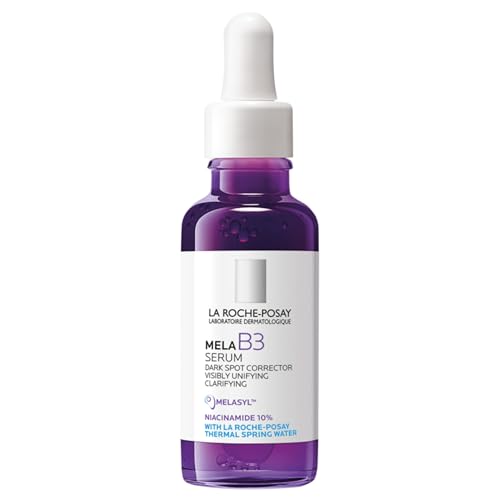
La Roche-Posay Mela B3 Serum Review: Quick Summary
- Product type: Leave-on facial brightening serum
- Main purpose: Reduce visible discoloration
- Best for: Dark spots and uneven tone
- May not suit: Fragrance-sensitive or very reactive skin
- Key ingredients or features: 10% niacinamide, Melasyl, LHA
- Return policy or guarantee: 30-day direct-purchase return policy
- Overall rating: 4.1/5
The manufacturer’s current US listing confirms a 30-day return window for purchases made directly through its website, while purchases from other retailers must follow the retailer’s policy.
What Is La Roche-Posay Mela B3 Serum?
La Roche-Posay Mela B3 Serum is a leave-on facial serum formulated for discoloration, including sunspots, age spots, post-acne marks, and uneven tone. The company recommends it for all skin types and positions it as a daily pigmentation treatment.
The serum is applied as 3 to 4 drops after cleansing, morning and evening, to the face and neck while avoiding the eye area. I like that the directions are straightforward rather than requiring an elaborate treatment routine.
Its main distinction is Melasyl, the company’s proprietary 2-mercaptonicotinoyl glycine ingredient, paired with 10% niacinamide. The manufacturer describes Melasyl as a patented approach to intercepting excess melanin before it contributes to visible discoloration.
What Does La Roche-Posay Mela B3 Serum Claim to Do?
The manufacturer’s major claims include:
- Reduce visible dark spots
- Improve uneven skin tone
- Reduce post-acne marks
- Improve skin brightness
- Address persistent discoloration
- Provide lasting-looking improvement
The company reports that 90% of participants showed improvement in at least one measure of persistent dark-spot size, contrast, or density after eight weeks. That is more specific than many cosmetic claims, although the study involved only 73 women and was conducted over 10 weeks.
I find the claims reasonably plausible, but “clinically supported” needs context. The evidence is strongest for the particular Mela B3 formulation studied, not for every pigmentation problem or every person who uses it.
How Is La Roche-Posay Mela B3 Serum Supposed to Work?
Melasyl is designed to interfere with melanin formation at a stage before excess pigment becomes visible. The manufacturer’s research describes this as a mechanism distinct from directly inhibiting tyrosinase, the enzyme commonly targeted by traditional brightening ingredients.
Niacinamide works differently. Human studies suggest topical niacinamide can reduce pigmentation partly by decreasing transfer of melanosomes, the pigment-containing structures made by melanocytes, into surrounding skin cells.
The biological reasoning therefore makes sense, but plausibility isn’t proof. What makes this formula more interesting is that a randomized clinical study has specifically examined Mela B3 containing Melasyl rather than relying entirely on research involving unrelated brightening products.
La Roche-Posay Mela B3 Serum Ingredients at a Glance
The current US formula lists 10% niacinamide as a disclosed active concentration and identifies Melasyl as 2-mercaptonicotinoyl glycine.
Main ingredients:
- Niacinamide, 10%
- 2-Mercaptonicotinoyl glycine, Melasyl
- Cystoseira tamariscifolia extract
- Sodium hyaluronate
- Capryloyl salicylic acid
- Retinyl palmitate
Complete ingredient list:
- Aqua / Water / Eau
- Dimethicone
- Niacinamide
- Glycerin
- Propylene glycol
- Polysilicone-11
- Silica
- Bis-PEG/PPG-16/16 PEG/PPG-16/16 dimethicone
- Cystoseira tamariscifolia extract
- 2-Mercaptonicotinoyl glycine
- PEG-20 methyl glucose sesquistearate
- Sodium hyaluronate
- Sodium hydroxide
- Sodium thiosulfate
- Carnosine
- Poloxamer 338
- Ammonium polyacryloyldimethyl taurate
- Dipotassium glycyrrhizate
- Caprylic/capric triglyceride
- Capryloyl salicylic acid
- Caprylyl glycol
- Citric acid
- Trisodium ethylenediamine disuccinate
- Xanthan gum
- Pentylene glycol
- Octyldodecanol
- Retinyl palmitate
- Tocopherol
- Pentaerythrityl tetra-di-t-butyl hydroxyhydrocinnamate
- Phenoxyethanol
- CI 17200 / Red 33
- Parfum / Fragrance
I would use the manufacturer’s current ingredient list as the reference because formulas can change by market or over time.
La Roche-Posay Mela B3 Serum Ingredients: Detailed Analysis
The formula has two ingredients that deserve most of the scientific attention: Melasyl and niacinamide. The remaining ingredients mainly support texture, hydration, stability, or tolerability.
Melasyl
Melasyl is the trade name for 2-mercaptonicotinoyl glycine. It is a newer cosmetic brightening ingredient developed by L’Oréal and described as targeting melanin production without directly inhibiting tyrosinase.
The evidence is promising but still developing. A randomized, investigator-blinded study compared a Mela B3 serum containing 0.5% Melasyl with 4% hydroquinone over three months in adults with facial melasma. The study found the serum non-inferior to hydroquinone on its primary measure, although sunscreen was also part of both regimens.
I consider that meaningful evidence because the research involves the actual product family rather than merely an ingredient in a laboratory. Still, one relatively short trial cannot establish long-term effectiveness across every form of hyperpigmentation.
Niacinamide
Niacinamide is vitamin B3 and has substantially more independent topical research behind it. A randomized study found 4% niacinamide improved melasma pigmentation over eight weeks, although it was not superior to 4% hydroquinone.
The reviewed serum discloses 10% niacinamide, which is higher than the 4% concentration used in several clinical pigmentation studies. That doesn’t automatically mean it will work better. Higher concentration isn’t synonymous with greater benefit.
Niacinamide also has a generally favorable cosmetic safety record. The Cosmetic Ingredient Review assessment found no irritation or sensitization concerns at concentrations up to those evaluated in cosmetic testing, although individual reactions can still occur.
Other Ingredients
- Glycerin: Humectant that helps attract and retain water.
- Propylene glycol: Solvent and humectant supporting formula texture.
- Dimethicone: Silicone that smooths skin and reduces moisture loss.
- Sodium hyaluronate: Humectant form of hyaluronic acid.
- Cystoseira extract: Algae-derived cosmetic conditioning ingredient.
- Carnosine: Antioxidant and skin-conditioning ingredient.
- Dipotassium glycyrrhizate: Licorice-derived soothing ingredient.
- Capryloyl salicylic acid: LHA exfoliant related to salicylic acid.
- Retinyl palmitate: Vitamin A derivative used as a skin-conditioning ingredient.
- Tocopherol: Vitamin E antioxidant supporting formula stability.
- Phenoxyethanol: Preservative used to protect water-based cosmetics.
- Fragrance: Added for scent and may bother sensitive users.
- CI 17200: Red cosmetic colorant.
- Xanthan gum: Thickener and stabilizer.
Does La Roche-Posay Mela B3 Serum Have Effective Ingredient Amounts?
The strongest transparency point is the 10% niacinamide disclosure. That lets me compare the formula with clinical research instead of guessing from ingredient order.
Melasyl’s consumer ingredient list does not disclose its percentage. However, the 2025 Mela B3 clinical study specifically used 0.5% 2-mercaptonicotinoyl glycine. Because the manufacturer does not clearly state that percentage on the consumer label, I wouldn’t assume the retail formula contains exactly that amount.
That limitation matters. I would have more confidence in the formula’s transparency if the Melasyl concentration were disclosed alongside the 10% niacinamide figure.
How Do You Use La Roche-Posay Mela B3 Serum?
La Roche-Posay recommends applying 3 to 4 drops after cleansing, morning and evening. The serum goes over the face and neck, while the eye area should be avoided. The company recommends sunscreen as the final morning skincare step.
I consider the routine practical because it doesn’t require complicated preparation or waiting periods. For a new leave-on product, patch testing is sensible if your skin is reactive, particularly because this formula contains fragrance.
What Results Can You Realistically Expect?
The manufacturer’s clinical information reports brighter-looking skin within two weeks and more noticeable dark-spot improvement by eight weeks. Its study found 90% of participants improved in at least one expert-graded dark-spot measure.
I would interpret those findings cautiously. Pigmentation varies considerably by cause and depth, so gradual fading is a more realistic expectation than complete removal. Melasma, in particular, can require more comprehensive dermatological management.
Independent reviews reflect that variability. Some users report visible improvement, while others report little change or dryness after several weeks.
Ease of Use and Overall User Experience
The product uses a dropper-style serum format and requires only 3 to 4 drops per application. That makes dosing simple, and the twice-daily directions fit easily into an ordinary skincare routine.
I can’t personally assess its texture or scent because no firsthand testing was provided. Consumer feedback on Ulta includes praise for its light, non-sticky feel, alongside complaints that it can feel drying for some users.
Safety, Side Effects, and Precautions
The formula is generally reasonable for topical cosmetic use, but fragrance is the main ingredient I would flag for sensitive users. Fragrances are among the more common causes of cosmetic contact dermatitis, particularly in people already prone to reactions.
Niacinamide itself has a good safety record, although individual irritation remains possible. If you develop persistent burning, swelling, itching, or a rash, stop using the product and seek medical advice rather than assuming irritation is part of the brightening process.
Because the serum contains a vitamin A derivative, pregnancy or breastfeeding questions are better discussed with a healthcare professional. I also wouldn’t apply it to damaged or actively irritated skin without professional guidance.
Product Quality and Manufacturing Transparency
The company provides a complete current ingredient list, identifies the 10% niacinamide concentration, supplies usage instructions, and publishes product-specific clinical information. Those are meaningful transparency positives.
The weaker point is independent verification. I could not verify a publicly available certificate of analysis or independent batch-testing report for this serum. The company’s statement that it performs clinical testing is useful, but it isn’t the same as independently published manufacturing verification.
Customer Reviews and Common Complaints
Consumer feedback is broadly favorable but not uniformly positive. Ulta reports a 4.4/5 rating from 1,190 reviews, while the manufacturer’s site reports 4.2/5 from more than 1,700 reviews. The manufacturer notes that its average includes incentivized reviews.
Repeated positive themes include perceived fading of dark spots, brighter-looking skin, and a lightweight feel. Negative feedback includes dryness, insufficient improvement, and disappointment when pigmentation did not change after several weeks.
I wouldn’t treat either pattern as proof of efficacy. Reviews are subjective and can be affected by expectations, other skincare products, sun exposure, and the underlying cause of pigmentation.
La Roche-Posay Mela B3 Serum Pros and Cons
- Strong niacinamide evidence
- 10% niacinamide clearly disclosed
- Finished-product clinical research exists
- Simple twice-daily routine
- Complete ingredient list provided
- Melasyl concentration isn’t disclosed
- Contains added fragrance
Who Should Consider La Roche-Posay Mela B3 Serum?
Based on the evidence and formula, I think these consumers are the best fit:
- People targeting mild-to-moderate discoloration.
- People wanting a leave-on brightening serum.
- Users comfortable with 10% niacinamide.
- People who prefer established dermocosmetic brands.
- Consumers willing to use the product consistently.
Who Should Avoid La Roche-Posay Mela B3 Serum?
I would be more cautious if you:
- Have a known fragrance allergy.
- Have highly reactive or irritated skin.
- Dislike fragranced facial products.
- Expect rapid removal of stubborn melasma.
- Need a fragrance-free pigmentation treatment.
- Are pregnant or breastfeeding and have concerns about vitamin A derivatives.
A dermatologist can help distinguish melasma, post-inflammatory pigmentation, sun-related spots, and other causes when the diagnosis is uncertain.
Is La Roche-Posay Mela B3 Serum Good Value for Money?
Value depends heavily on what you want from a brightening serum. You’re paying for a formula combining a well-studied ingredient, a newer proprietary active, cosmetic conditioning ingredients, and product-specific clinical research rather than simply buying niacinamide alone.
I think the formula becomes more compelling because Mela B3 itself has been studied in people with melasma. The main value limitation is transparency around Melasyl’s concentration, which makes direct comparison with research doses more difficult.
For someone seeking a straightforward discoloration serum with a substantial evidence base, that tradeoff may be reasonable. For someone prioritizing maximum ingredient transparency or fragrance-free skincare, alternatives may be easier to justify.
La Roche-Posay Mela B3 Serum: My Verdict
I consider this serum worth considering, particularly for people dealing with post-acne marks, sun-related discoloration, or uneven tone who want a convenient daily product. The 10% niacinamide concentration is clearly disclosed, and the existence of product-specific Mela B3 research gives it a stronger foundation than many brightening serums.
My main reservation is that the evidence is still relatively new and the Melasyl concentration isn’t stated on the consumer label. The added fragrance also reduces its appeal for fragrance-sensitive skin. I wouldn’t interpret the product’s clinical results as a guarantee of dramatic improvement.
For me, the overall picture lands at 4.1/5. It’s a thoughtfully formulated brightening serum with encouraging clinical evidence, but not an unquestionable pigmentation solution. The buyer most likely to appreciate it is someone seeking gradual improvement and willing to use sunscreen consistently.
Disclaimer
This review is based on current product information, ingredient analysis, published research, manufacturer materials, and consumer feedback. Results vary between individuals. This article is educational and does not replace personalized medical advice, diagnosis, or treatment.