
Dryness, dullness, fine lines, and uneven texture are common reasons people add a serum to an otherwise simple skincare routine. A good serum should improve hydration or appearance without relying on claims that outpace its evidence.
Estée Lauder Advanced Night Repair is a long-established facial serum built around fermented ingredients, sodium hyaluronate, antioxidants, and Tripeptide-32. The company positions it as a day-and-night treatment for hydration, visible renewal, firmness, radiance, and multiple signs of aging.
What interests me most is the gap between the formula’s sensible skincare ingredients and some of its broader “repair” language. The current formula is easy to examine, but exact concentrations are not disclosed, so the strength of individual ingredients is harder to judge.
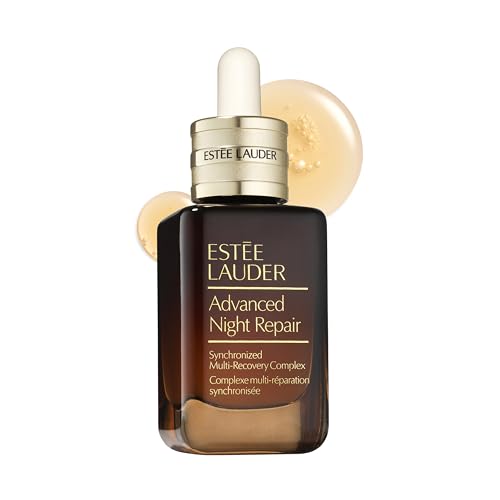
Estée Lauder Advanced Night Repair Review: Quick Summary
- Product type: Hydrating anti-aging face serum
- Main purpose: Hydration, radiance, visible lines, firmness
- Best for: Dry, dull, normal, combination, sensitive skin
- May not suit: Very reactive skin or highly evidence-driven buyers
- Key ingredients or features: Bifida ferment lysate, Tripeptide-32, sodium hyaluronate
- Return policy or guarantee: 30-day direct-purchase returns
- Overall rating: 4.0/5
What Is Estée Lauder Advanced Night Repair?
Advanced Night Repair is a water-based facial serum designed for morning and evening use. Estée Lauder markets it for all skin types, including sensitive skin, with goals including hydration, visible firmness, radiance, uneven tone, lines, and wrinkles. The official product information describes its current positioning and testing claims.
The formula centers on Bifida Ferment Lysate, Tripeptide-32, sodium hyaluronate, yeast and lactobacillus ferments, plus conditioning and antioxidant ingredients. It is oil-free and marketed as non-acnegenic, dermatologist-tested, ophthalmologist-tested, and free of synthetic fragrance.
It is intended for regular, long-term skincare rather than occasional use. I think that is a useful clarification for consumers who assumed it was exclusively a bedtime serum.
What Does Estée Lauder Advanced Night Repair Claim to Do?
The manufacturer’s major claims include:
- Visibly reducing fine lines and wrinkles
- Improving firmness and elasticity
- Increasing radiance
- Providing up to 72-hour hydration
- Supporting visible renewal
- Providing antioxidant protection
- Improving the look of sleep-deprived skin
Some claims are relatively measurable, while terms such as “repair” and “renewal” are broader. Estée Lauder reports several company-sponsored clinical and consumer tests, including studies involving 26, 29, 42, 148, and 543 women. These figures appear in the manufacturer’s clinical claims.
I find the hydration and cosmetic appearance claims easier to interpret than the more ambitious biological language. The published studies are product-specific, which is useful, but several are small, short-term, or consumer assessments rather than large independent randomized trials.
How Is Estée Lauder Advanced Night Repair Supposed to Work?
The proposed approach combines humectants, which attract water, with fermented ingredients, conditioning agents, antioxidants, and a peptide. Sodium hyaluronate helps hold water near the skin, while the company says Tripeptide-32 supports visible renewal associated with the skin’s day-night rhythm.
That general mechanism is biologically plausible. Hydration can temporarily soften the appearance of fine lines, while improving barrier function can make skin feel smoother and less uncomfortable.
The weaker point is proving that the proprietary “night” mechanism itself creates meaningful anti-aging effects. I would call that evidence limited to moderate, rather than treating the circadian-rhythm explanation as established proof.
Estée Lauder Advanced Night Repair Ingredients at a Glance
The formula below is the current ingredient list published by Estée Lauder’s regional site. The company warns that formulas can change, so your package should take priority if it differs. The published ingredient list is the best reference for the current version.
Main ingredients:
- Bifida Ferment Lysate
- Tripeptide-32
- Sodium Hyaluronate
- Yeast Extract
- Lactobacillus Ferment
- Adansonia Digitata Seed Extract
- Caffeine
- Bisabolol
- Squalane
- Tocopheryl Acetate
Complete ingredient list:
- Water/Aqua/Eau
- Bifida Ferment Lysate
- PEG-8
- Propanediol
- Bis-PEG-18 Methyl Ether Dimethyl Silane
- Methyl Gluceth-20
- Glycereth-26
- PEG-75
- Butylene Glycol
- Adansonia Digitata Seed Extract
- Tripeptide-32
- Sodium Hyaluronate
- Yeast Extract/Faex/Extrait De Levure
- Lactobacillus Ferment
- Cola Acuminata Seed Extract
- Anthemis Nobilis Flower Extract
- Hydrolyzed Algin
- Pantethine
- Caffeine
- Lecithin
- Sodium RNA
- Bisabolol
- Squalane
- Glycerin
- Oleth-3 Phosphate
- Caprylyl Glycol
- Oleth-3
- Oleth-5
- Choleth-24
- Hydrogenated Lecithin
- Jojoba Wax PEG-120 Esters
- Ceteth-24
- Tocopheryl Acetate
- Carbomer
- Triethanolamine
- Tetrasodium EDTA
- BHT
- Xanthan Gum
- Potassium Sorbate
- Disodium EDTA
- Phenoxyethanol
- Red 4
- Yellow 5
Estée Lauder Advanced Night Repair Ingredients: Detailed Analysis
The formula makes the most sense when its three leading functional ingredients are considered separately. I would not treat every plant extract or ferment as an equally important anti-aging active.
Bifida Ferment Lysate
Bifida Ferment Lysate is a processed ferment derived from Bifidobacterium species. It is commonly used in skincare formulations intended to support conditioning and barrier function.
The evidence is preliminary to limited. Laboratory research has found effects relevant to skin-barrier defense, while a 2023 human study of a different probiotic-ferment lotion reported improved barrier measurements. The published bifida research and human ferment-lotion trial do not establish that Advanced Night Repair produces identical effects.
Those studies do not establish that the exact Bifida preparation or concentration in Advanced Night Repair produces the same result. That distinction matters because fermentation method, dose, formulation, and combination with other ingredients can change performance.
Tripeptide-32
Tripeptide-32 is the peptide Estée Lauder calls its “Night Peptide.” The company associates it with skin’s circadian processes and visible renewal, making it central to the serum’s identity. Those claims are described in the manufacturer’s peptide information.
Peptides are biologically interesting, but peptide evidence is highly ingredient-specific. I could not verify a robust independent clinical literature demonstrating that Tripeptide-32 alone produces the same visible changes reported for this finished serum.
For me, this makes the peptide a promising but difficult-to-isolate part of the formula. Estée Lauder’s finished-product testing is more relevant than generic peptide marketing, although much of that evidence is company-sponsored.
Sodium Hyaluronate
Sodium hyaluronate is a salt form of hyaluronic acid and functions primarily as a humectant. It helps the skin retain water, which can temporarily make the surface look smoother and more plump.
The evidence for topical hyaluronic acid as a moisturizing ingredient is strong enough to support its basic purpose. However, evidence from oral hyaluronate supplements cannot be used as proof for this topical serum, because the exposure route is completely different. A recent oral hyaluronate trial therefore has limited relevance here.
This ingredient is one of the easiest parts of the formula to trust. The unresolved issue is not whether hyaluronic acid can hydrate skin, but how much is present here and how much of the serum’s reported effect comes from hydration versus the other ingredients.
Other Ingredients
- Yeast Extract: Conditioning and antioxidant-support ingredient; evidence depends strongly on the specific extract.
- Lactobacillus Ferment: Fermentation-derived conditioning ingredient; human evidence remains limited.
- Adansonia Digitata Seed Extract: Botanical conditioning and antioxidant ingredient; clinical evidence for this formula is limited.
- Cola Acuminata Seed Extract: Plant extract containing caffeine-related compounds; included for conditioning and antioxidant support.
- Anthemis Nobilis Flower Extract: Chamomile-derived conditioning ingredient; sensitive users may still react to botanicals.
- Hydrolyzed Algin: Seaweed-derived thickener and film-forming ingredient.
- Pantethine: Vitamin B5-related compound used here as a conditioning ingredient.
- Caffeine: Antioxidant and vasoconstrictive ingredient; evidence for broader facial anti-aging effects is limited.
- Lecithin: Emulsifying and skin-conditioning ingredient.
- Sodium RNA: Conditioning ingredient with limited publicly independent clinical evidence.
- Bisabolol: Soothing, skin-conditioning ingredient with an established cosmetic safety record. The CIR safety assessment supports its cosmetic use.
- Squalane: Lightweight emollient that softens skin and reduces moisture loss.
- Glycerin: Humectant that attracts water into the outer skin.
- Tocopheryl Acetate: Vitamin E derivative used mainly for conditioning and antioxidant support.
- Caprylyl Glycol: Humectant and preservative-support ingredient.
- Carbomer: Thickener that creates the serum’s gel structure.
- Triethanolamine: pH adjuster that helps stabilize the formula.
- Tetrasodium EDTA: Chelating agent that improves formula stability.
- BHT: Antioxidant used to protect the formula from oxidation.
- Xanthan Gum: Thickener and stabilizer.
- Potassium Sorbate: Preservative.
- Disodium EDTA: Chelating agent that supports product stability.
- Phenoxyethanol: Preservative considered safe in cosmetics up to 1% by the European SCCS. The European safety assessment supports this use.
- Red 4: Cosmetic colorant.
- Yellow 5: Cosmetic colorant.
Does Estée Lauder Advanced Night Repair Have Effective Ingredient Amounts?
This is one of my biggest limitations with the formula. Estée Lauder publishes the ingredient order but does not disclose concentrations for Bifida Ferment Lysate, Tripeptide-32, sodium hyaluronate, or most other actives.
That means I cannot reliably say whether the amounts match concentrations used in research. Ingredient position can provide clues, but it cannot establish an exact percentage.
The formula may still perform well, and the company’s finished-product testing provides some direct evidence. Still, stronger concentration transparency would make it easier to judge how reproducible those results are.
How Do You Use Estée Lauder Advanced Night Repair?
Estée Lauder recommends applying one dropper to clean skin every morning and evening, covering the face and neck. The serum should be followed with moisturizer and eye cream. These directions appear in the official usage guidance.
For sensitive skin, introducing one new product at a time is sensible. I would also patch-test when your skin is reactive, especially because the formula contains multiple botanical and ferment-derived ingredients.
The manufacturer says the serum has also been tested for use after IPL, beginning 24 hours after treatment. That is product-specific evidence, but it should not be interpreted as universal clearance for every cosmetic procedure.
What Results Can You Realistically Expect?
The strongest expectation is improved hydration and a temporarily smoother, plumper appearance. Estée Lauder’s own testing reports changes in moisture, firmness, elasticity, and perceived radiance after short periods, as described in its reported product testing.
More ambitious wrinkle and “repair” effects are harder to separate from hydration, normal day-to-day variation, and the rest of a skincare routine. I would expect gradual cosmetic improvement rather than dramatic structural transformation.
The serum also does not contain retinol. Estée Lauder explicitly states that, so buyers seeking a retinoid-based treatment should understand that this is a different type of product.
Ease of Use and Overall User Experience
The official description identifies an oil-free, water-gel texture and reports that 90% of consumers in its testing said it absorbed quickly. That makes the format practical for layering under moisturizer or makeup.
A retailer-based review from Escentual described the texture as watery-gel and fast absorbing, while user reports across skincare communities commonly mention smooth hydration. These are useful practical observations, but they remain subjective. Escentual’s review offers one third-party example.
Scent feedback is mixed. Some users barely notice it, while others describe a medicinal or unusual scent. I would treat that as a preference issue rather than a quality problem.
Safety, Side Effects, and Precautions
The company states that the serum is tested for sensitive skin and is non-acnegenic. Still, no cosmetic is completely irritation-proof, particularly when it contains several botanical extracts and ferment-derived ingredients.
People with known ingredient allergies or very reactive skin should be cautious. Persistent burning, swelling, itching, or rash warrants stopping the product and seeking appropriate medical advice.
For pregnancy and breastfeeding, Estée Lauder recommends checking with a physician before adding the product. The company’s pregnancy guidance should be consulted for the current wording.
Product Quality and Manufacturing Transparency
The company provides a full INCI list, usage directions, product-specific testing claims, and packaging information. The bottle and carton are described as recyclable, and the U.S. product page identifies the glass bottle as part of the packaging.
The main weakness is concentration transparency. I also could not independently verify a public certificate of analysis for this specific finished serum. That does not prove inadequate quality, but it limits what a consumer can independently assess.
For direct U.S. purchases, Estée Lauder’s current policy allows returns within 30 days of delivery in new or gently used condition. The current return policy should be checked before ordering because policies can change.
Customer Reviews and Common Complaints
Estée Lauder’s own site contains many highly positive reviews emphasizing softness, hydration, and smoother-looking skin. Those testimonials are useful for understanding customer perception, but they should not be treated as clinical evidence. The official customer reviews illustrate this feedback pattern.
Third-party feedback is similarly mixed in its details. Hwahae’s large review database shows frequent praise for texture, hydration, and glow, alongside recurring complaints about premium positioning and occasional irritation or scent dissatisfaction. Hwahae feedback provides another consumer perspective.
I would give more weight to repeated patterns than dramatic individual reviews. Consumer feedback is inherently vulnerable to expectations, skin differences, reformulations, and incomplete reporting.
Estée Lauder Advanced Night Repair Pros and Cons
- Strong hydration-focused formula
- Full ingredient list disclosed
- Useful product-specific testing
- Lightweight, easy-to-layer format
- Fragrance-free by manufacturer claim
- Active concentrations undisclosed
- Independent evidence remains limited
Who Should Consider Estée Lauder Advanced Night Repair?
The product makes the most sense for consumers who want a versatile hydrating serum with a relatively gentle, non-retinoid approach.
- People prioritizing hydration and radiance.
- Users wanting one multi-purpose serum.
- People who prefer fragrance-free formulas.
- Consumers comfortable with premium skincare.
- Users interested in fermented skincare ingredients.
Younger people generally do not need an anti-aging-focused serum simply because it is marketed for all ages. A simpler cleanser, moisturizer, and sunscreen routine can be entirely reasonable when aging concerns are not relevant.
Who Should Avoid Estée Lauder Advanced Night Repair?
I would be more cautious for people who need unusually simple formulas or strong ingredient transparency.
- Anyone allergic to listed ingredients.
- People with highly reactive skin.
- Buyers demanding disclosed active concentrations.
- Consumers wanting a retinoid treatment.
- People who dislike unusual skincare scents.
Anyone dealing with persistent skin disease, significant irritation, or a reaction should speak with a dermatologist rather than relying on cosmetic troubleshooting alone.
Is Estée Lauder Advanced Night Repair Good Value for Money?
The value proposition rests on convenience, formulation elegance, brand development, and product-specific testing rather than on unusually transparent dosing. You are paying for a polished multi-ingredient serum with substantial development behind it.
I think the value is strongest for someone who genuinely prefers this texture and formula and will use it consistently. It is less compelling for a buyer focused mainly on proven active ingredients at clearly disclosed concentrations.
There are now many hydrating peptide and ferment-based serums, so Advanced Night Repair is not the only credible option. Its long testing history and refined formula help justify its position, but they do not make every competing serum inferior.
Estée Lauder Advanced Night Repair: My Verdict
My verdict is worth considering, particularly for people seeking hydration, smoother-looking skin, and a comfortable serum that can fit easily into both morning and evening routines. The ingredient list is thoughtful, and sodium hyaluronate has a clear, evidence-backed moisturizing role.
The weaker case involves the proprietary peptide and ferment story. Those ingredients are interesting, but independent evidence for the exact concentrations and finished formula is less convincing than the marketing language can imply. The missing concentration data also makes a rigorous ingredient-by-ingredient assessment impossible.
For me, that leaves Advanced Night Repair as a well-formulated luxury serum rather than a miracle anti-aging treatment. Buyers most likely to appreciate it are those who value hydration, elegant formulation, and convenience. Buyers who prioritize independently verified dosing may reasonably prefer a more transparent alternative.
Disclaimer
This review is based on current product information, ingredient analysis, available scientific research, company materials, and consumer feedback discussed above. Results vary between individuals. This article is educational and does not replace personalized medical advice, diagnosis, or treatment.