
Dark spots, post-acne marks, uneven tone, dullness, and early photoaging are common skincare concerns. Vitamin C is widely used for these goals because it offers antioxidant activity and may support collagen-related processes in skin.
Estée Lauder’s Perfectionist Pro serum combines a vitamin C derivative with a triple-ferment complex, humectants, soothing ingredients, botanical extracts, and salicylic acid. The current formula is marketed as a daily brightening treatment for several types of visible discoloration.
What interests me most is the gap between a sophisticated ingredient list and the evidence supporting the finished formula. Vitamin C has credible research behind it, but concentration, chemical form, stability, and product-specific testing all affect how meaningful that evidence really is.
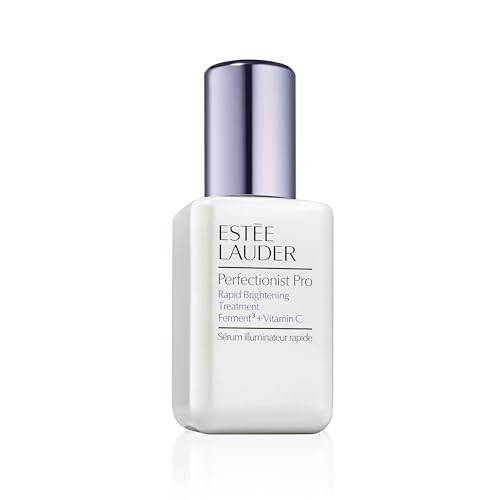
Estée Lauder Perfectionist Pro Vitamin C Serum Review: Quick Summary
- Product type: Brightening facial serum
- Main purpose: Dark spots, uneven tone, radiance
- Best for: Dullness and visible discoloration
- May not suit: Very fragrance-sensitive skin
- Key ingredients or features: Ascorbyl glucoside, Ferment³, acetyl glucosamine, salicylic acid, hyaluronic acid
- Return policy or guarantee: 30-day direct-purchase returns in the U.S., according to the official return policy
- Overall rating: 3.8/5
What Is Estée Lauder Perfectionist Pro Vitamin C Serum?
This is a leave-on facial serum designed to brighten the appearance of skin, reduce the look of discoloration, smooth texture, and improve radiance. Estée Lauder positions it as a daily treatment for multiple types of visible dark spots.
The current version comes in a 50 ml bottle and is intended for morning and evening application before moisturizer. The company describes it as oil-free and suitable for all skin types.
What distinguishes it is the combination of a vitamin C derivative, three-ferment technology, hydrating ingredients, botanical extracts, and salicylic acid. I find that combination more interesting than the “vitamin C serum” label alone.
What Does Estée Lauder Perfectionist Pro Vitamin C Serum Claim to Do?
The manufacturer makes several major claims:
- Reduce visible dark spots
- Improve uneven skin tone
- Reduce the appearance of post-acne marks
- Improve radiance and clarity
- Smooth skin texture
- Reduce the appearance of pores
- Provide substantial hydration
- Improve the appearance of skin within one to two weeks
The company reports clinical testing involving 114 women and consumer testing involving 280 women. Those findings indicate that the finished product has been tested, but they don’t establish how it compares with competing vitamin C treatments.
I consider some claims reasonably measurable, while others, such as improved “clarity,” are subjective. The short timeline also deserves caution because visible pigmentation changes generally depend on the cause and severity of discoloration.
How Is Estée Lauder Perfectionist Pro Vitamin C Serum Supposed to Work?
The formula uses ascorbyl glucoside, a vitamin C derivative designed to be more stable than pure L-ascorbic acid. Vitamin C can provide antioxidant activity and influence pathways involved in collagen production and pigmentation.
The evidence for topical vitamin C is reasonably encouraging. A systematic review of topical vitamin C found potential benefits for several aspects of skin aging, although studies differed substantially in formulation and methodology.
The Ferment³ concept adds fermented ingredients intended to support brighter-looking, clearer skin. I consider that mechanism plausible, but proprietary blends are difficult to evaluate independently when their exact composition and concentrations aren’t disclosed.
Estée Lauder Perfectionist Pro Vitamin C Serum Ingredients at a Glance
The current ingredient list is available from the manufacturer and major retailers. Estée Lauder also notes that ingredients can change, so the packaging you receive should take priority.
Main ingredients:
- Ascorbyl glucoside
- Trametes versicolor extract
- Algae extract
- Acetyl glucosamine
- Salicylic acid
- Sodium hyaluronate
- Resveratrol
Complete ingredient list:
- Water/Aqua/Eau
- Butylene Glycol
- Glycerin
- Glycereth-26
- Isononyl Isononanoate
- Dimethicone
- Propanediol
- Trametes Versicolor Extract
- Ascorbyl Glucoside
- Algae Extract
- Acetyl Glucosamine
- Hydroxyethyl Urea
- Lentil Fruit Extract
- Apple Fruit Extract
- Oat Kernel Extract
- Bis-PEG-18 Methyl Ether Dimethyl Silane
- Watermelon Fruit Extract
- Wheat Germ Extract
- Resveratrol
- Artemia Extract
- Tocopheryl Acetate
- Sucrose
- Trehalose
- Salicylic Acid
- PEG-75
- Yeast Extract
- Sodium Hydroxide
- Oleth-3 Phosphate
- Sorbitol
- Caprylyl Glycol
- Barley Extract
- Oleth-3
- Sodium Polyaspartate
- Carbomer
- Myrtle Leaf Extract
- Caffeine
- Oleth-5
- Acrylates/C10-30 Alkyl Acrylate Crosspolymer
- Dipotassium Glycyrrhizate
- Propylene Glycol Caprylate
- Squalane
- Sodium Hyaluronate
- Choleth-24
- Ceteth-24
- Xanthan Gum
- Sodium Lactate
- Oryzanol
- Sodium PCA
- Glyceryl Acrylate/Acrylic Acid Copolymer
- Ethylhexylglycerin
- Glucose
- Fragrance
- Sodium Citrate
- Citric Acid
- Disodium EDTA
- BHT
- Potassium Sorbate
- Sodium Benzoate
- Phenoxyethanol
The current retailer ingredient listing provides the same general formula, although packaging and formulas can change.
Estée Lauder Perfectionist Pro Vitamin C Serum Ingredients: Detailed Analysis
The formula has several worthwhile components, but the lack of individual concentrations is the biggest limitation when judging effectiveness.
Ascorbyl Glucoside
Ascorbyl glucoside combines vitamin C with glucose, creating a stabilized vitamin C derivative. It is included primarily for antioxidant and brightening purposes.
There is credible evidence supporting topical vitamin C generally, but much less certainty about the exact concentration of ascorbyl glucoside used here. The manufacturer doesn’t disclose its percentage, so I can’t determine whether it matches studied concentrations.
Ferment³ Complex
Estée Lauder describes Ferment³ as involving fermented yeast, molasses, and algae components intended to improve the appearance of pigmentation and skin clarity.
My confidence is lower here than with vitamin C. Fermentation can change the compounds present in an ingredient, but the proprietary nature of this complex makes its independent clinical contribution difficult to establish.
Acetyl Glucosamine
Acetyl glucosamine is a skin-conditioning ingredient with some evidence for improving uneven pigmentation, particularly alongside other brightening ingredients.
Its position relatively high in the ingredient list makes it notable, but the exact concentration remains undisclosed. I therefore view it as a potentially useful supporting active rather than a proven reason to expect dramatic results.
Salicylic Acid
Salicylic acid is a beta-hydroxy acid that helps loosen dead skin cells and can improve surface texture. It also has established usefulness in acne-prone skin at appropriate concentrations.
Here, its percentage isn’t disclosed. That makes its exfoliating strength impossible to judge accurately. Sensitive skin may also find a formula containing several active ingredients more irritating.
Sodium Hyaluronate
Sodium hyaluronate is a form of hyaluronic acid that attracts water and supports skin hydration. That fits the serum’s moisturizing claims.
The ingredient itself is useful as a humectant, but hydration shouldn’t be confused with permanent correction of pigmentation. I see this mainly as a formulation-support ingredient.
Other Ingredients
- Water: Main solvent and formula base.
- Butylene Glycol: Humectant and solvent.
- Glycerin: Well-established skin-hydrating humectant.
- Glycereth-26: Humectant and texture enhancer.
- Isononyl Isononanoate: Lightweight emollient.
- Dimethicone: Silicone that smooths and reduces moisture loss.
- Propanediol: Solvent and humectant.
- Hydroxyethyl Urea: Humectant supporting hydration.
- Lentil Extract: Botanical skin-conditioning ingredient.
- Apple Extract: Botanical antioxidant and conditioning ingredient.
- Oat Extract: Soothing and skin-conditioning ingredient.
- Watermelon Extract: Botanical conditioning ingredient.
- Wheat Germ Extract: Conditioning botanical extract.
- Artemia Extract: Marine-derived cosmetic conditioning ingredient.
- Tocopheryl Acetate: Vitamin E derivative and antioxidant.
- Sucrose: Humectant and texture-support ingredient.
- Trehalose: Humectant that helps retain moisture.
- PEG-75: Solubilizing and texture-support ingredient.
- Sodium Hydroxide: pH adjuster.
- Oleth-3 Phosphate: Emulsifier and surfactant.
- Sorbitol: Humectant.
- Caprylyl Glycol: Humectant and preservative-support ingredient.
- Sodium Polyaspartate: Film-forming conditioning ingredient.
- Carbomer: Thickener and gel-former.
- Myrtle Leaf Extract: Botanical conditioning ingredient.
- Caffeine: Conditioning and antioxidant-support ingredient.
- Acrylates Crosspolymer: Thickener and stabilizer.
- Dipotassium Glycyrrhizate: Licorice-derived soothing ingredient.
- Squalane: Emollient supporting softness.
- Sodium Hyaluronate: Humectant supporting hydration.
- Xanthan Gum: Thickener and stabilizer.
- Sodium Lactate: Humectant and pH-support ingredient.
- Sodium PCA: Natural moisturizing-factor component.
- Fragrance: Provides scent and may bother fragrance-sensitive skin.
- Citric Acid: pH adjuster.
- Disodium EDTA: Chelating agent that improves formula stability.
- BHT: Antioxidant that helps protect the formula.
- Potassium Sorbate: Preservative.
- Sodium Benzoate: Preservative.
- Phenoxyethanol: Cosmetic preservative.
Does Estée Lauder Perfectionist Pro Vitamin C Serum Have Effective Ingredient Amounts?
This is where I would have liked substantially more transparency. Estée Lauder doesn’t disclose the percentage of ascorbyl glucoside, acetyl glucosamine, salicylic acid, or the individual ferment components.
That prevents a reliable comparison with clinical concentrations. Ingredient order can provide clues about relative amounts, but it cannot establish exact percentages. I therefore consider the formula promising but not fully dose-transparent.
How Do You Use Estée Lauder Perfectionist Pro Vitamin C Serum?
The official directions are straightforward. Apply the serum to clean skin before moisturizer, morning and evening, while avoiding the eye area. Estée Lauder recommends daytime UV protection alongside the product.
Because the formula contains salicylic acid and fragrance, I would introduce it cautiously if your skin is sensitive. Patch testing can also be sensible before applying it regularly to the face.
The manufacturer recommends sun protection and limiting sun exposure during use and for the following week. That’s particularly relevant when your goal is improving discoloration.
What Results Can You Realistically Expect?
The most realistic expectation is improved radiance, hydration, and a more even-looking complexion. Topical vitamin C has credible evidence for improving aspects of photoaged skin, although results vary considerably between formulations.
Dark spots may become less noticeable with consistent use, but I wouldn’t interpret “rapid” as a guarantee of dramatic fading. Independent research doesn’t establish that this particular serum will outperform other well-formulated brightening products.
Ease of Use and Overall User Experience
The formula is designed to feel lightweight and hydrating, and the company describes it as fast-absorbing and oil-free. The bottle is also described as containing recycled glass.
I didn’t personally test the texture or scent, so I wouldn’t present those qualities as firsthand observations. Consumer feedback is generally favorable, although some users report limited visible brightening compared with expectations.
Safety, Side Effects, and Precautions
Vitamin C derivatives used in cosmetics have a generally favorable safety record. A cosmetic safety assessment concluded that ascorbic acid and related ingredients are safe for their assessed cosmetic uses.
The more practical concern is irritation from the complete formula. Fragrance and salicylic acid may not suit everyone, particularly people with reactive skin. Avoid the eye area and stop using the product if significant irritation develops.
Product Quality and Manufacturing Transparency
The company provides a complete ingredient list, directions, skin-type information, product claims, and product-specific clinical testing information. It also provides packaging and sustainability information on its official product materials.
My main reservation is active-ingredient transparency. Exact percentages, detailed independent testing, and a publicly available certificate of analysis aren’t provided. “Clinically tested” therefore shouldn’t be confused with independently demonstrated clinical superiority.
Customer Reviews and Common Complaints
Current feedback is available through Estée Lauder, Ulta, Sephora, and other consumer platforms. Retailer feedback can be useful for identifying practical experiences, although it shouldn’t be treated as scientific evidence.
Some consumer reviews praise the serum as a repeat purchase and report improved brightness. Others describe little noticeable change and question whether the results justify choosing it over competing products.
I would treat those experiences as usability signals rather than proof of effectiveness. Reviews can be affected by expectations, individual routines, inconsistent use, and other sources of bias.
Estée Lauder Perfectionist Pro Vitamin C Serum Pros and Cons
- Uses a stabilized vitamin C derivative.
- Includes multiple hydrating ingredients.
- Finished product has clinical testing.
- Complete ingredient list is available.
- Straightforward daily routine.
- Active concentrations aren’t disclosed.
- Fragrance may bother sensitive skin.
Who Should Consider Estée Lauder Perfectionist Pro Vitamin C Serum?
From a consumer perspective, I think it makes the most sense for people who:
- Want a multitasking brightening serum.
- Prefer a hydrating rather than minimalist formula.
- Have dullness or uneven-looking tone.
- Like combining antioxidant and exfoliating ingredients.
- Are comfortable with fragranced skincare.
Who Should Avoid Estée Lauder Perfectionist Pro Vitamin C Serum?
I would be more cautious if you:
- React easily to fragranced skincare.
- Have a compromised or irritated skin barrier.
- Already use several exfoliating products.
- Need precisely disclosed active concentrations.
- Expect dramatic pigmentation changes within days.
If you have persistent or changing pigmentation, professional assessment is more appropriate than relying on a cosmetic serum alone.
Is Estée Lauder Perfectionist Pro Vitamin C Serum Good Value for Money?
The formula gives you more than vitamin C alone. You’re paying for a combination of antioxidant, hydrating, exfoliating, botanical, and ferment ingredients, along with a finished-product clinical testing program.
However, undisclosed active concentrations weaken the value proposition from an evidence-based perspective. I would be more enthusiastic if the company disclosed key percentages and provided stronger independent comparisons with established alternatives.
Estée Lauder Perfectionist Pro Vitamin C Serum: My Verdict
I would rate this serum 3.8 out of 5 and describe it as worth considering, but difficult to judge completely. The formula contains legitimate skincare ingredients, including a vitamin C derivative, humectants, salicylic acid, acetyl glucosamine, and sodium hyaluronate.
The biggest weakness isn’t that the ingredients are poor. It’s that important concentrations aren’t disclosed. Research supports topical vitamin C as a category, but it doesn’t prove that this particular combination delivers superior results.
I think it will appeal most to someone who wants a sophisticated, hydrating brightening serum and values a multifaceted formula. If your priority is maximum scientific transparency, I’d favor a product that clearly discloses its active concentrations.
B0DB97JRWC
Disclaimer
This review is based on current product information, ingredient analysis, available scientific research, company disclosures, and consumer feedback discussed above. Results vary between individuals. This article is educational and doesn’t replace personalized medical advice, diagnosis, or treatment.