
Dryness, tightness, and fine lines often look worse when skin is dehydrated. A well-formulated hydrating serum can improve surface moisture and temporarily soften the appearance of lines without acting like a medical treatment.
PCA SKIN positions this serum as a more comprehensive hydrator, combining several forms of hyaluronic acid with niacinamide, ceramides, and supporting ingredients. The company also reports product-specific clinical measurements on its official product page.
Those claims deserve a closer look. I wanted to separate the evidence for individual ingredients from evidence on the finished formula, while also examining transparency, fragrance, directions, consumer feedback, and the company’s return policy.
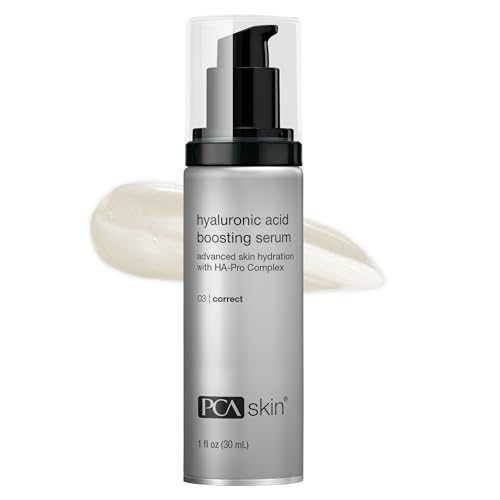
PCA SKIN Hyaluronic Acid Boosting Serum Review: Quick Summary
Product type: Leave-on facial hydrating serum
Main purpose: Hydration, smoothing, visible plumping
Best for: Dry, dehydrated, or normal skin
May not suit: Fragrance-sensitive or highly reactive skin
Key ingredients or features: Hyaluronic acids, niacinamide, ceramides, cholesterol, phytosphingosine
Return policy or guarantee: 60-Day Satisfaction Guarantee on eligible direct purchases, according to the company’s return policy
Overall rating: 4.0/5
What Is PCA SKIN Hyaluronic Acid Boosting Serum?
This is a leave-on facial serum designed primarily for hydration and the appearance of smoother, plumper skin. The manufacturer recommends using it morning and night on the face and neck, according to its official application directions.
The current formula combines several hyaluronic acid forms with niacinamide and a ceramide-based lipid system. That makes it broader than a basic hyaluronic acid serum, which may contain relatively few supporting ingredients.
PCA SKIN also targets visible fine lines, surface smoothness, and skin plumping. I find the intended audience fairly broad, although the fragrance-containing formula may matter for particularly sensitive users.
What Does PCA SKIN Hyaluronic Acid Boosting Serum Claim to Do?
The manufacturer makes several measurable claims:
- Increase skin hydration by 55%.
- Improve skin plumping by 60%.
- Improve fine lines by 31%.
- Increase skin hyaluronic acid levels by 50% within 24 hours.
- Provide immediate surface hydration and smoothing.
According to the manufacturer’s published clinical information, the three percentage improvements come from a six-week clinical study involving 40 participants.
The same source describes the 24-hour increase in skin hyaluronic acid as an in-vitro finding. That distinction matters because laboratory results do not establish what users will experience on their skin.
These claims are more specific than typical skincare marketing. However, I found the supporting study information on the manufacturer’s website rather than in an independent peer-reviewed publication. That makes the findings interesting, but not equivalent to broad independent confirmation.
How Is PCA SKIN Hyaluronic Acid Boosting Serum Supposed to Work?
Hyaluronic acid binds water and helps increase hydration in the outer skin layers. A review of topical hyaluronic acid research describes evidence for improvements in hydration and skin appearance, although outcomes vary with molecular size, formulation, and study design.
The evidence becomes more useful when viewed alongside clinical niacinamide research. Niacinamide can support the skin barrier and improve several visible signs associated with photodamage and aging. Ceramides and cholesterol are also important components of the skin barrier.
So the overall mechanism is biologically plausible. My reservation is that plausibility does not prove this exact combination produces every advertised result.
PCA SKIN Hyaluronic Acid Boosting Serum Ingredients at a Glance
The current official ingredient list contains humectants, emollients, silicones, barrier lipids, preservatives, plant extracts, and multiple hyaluronic-acid-related ingredients. Because formulas can change, the manufacturer’s current ingredient list should remain the final reference.
Main ingredients:
- Niacinamide
- Hydrolyzed Hyaluronic Acid
- Sodium Hyaluronate
- Hydrolyzed Glycosaminoglycans
- Hyaluronic Acid
- Ceramide NP
- Ceramide AP
- Ceramide EOP
- Phytosphingosine
- Cholesterol
Complete ingredient list:
- Water
- Propanediol
- Glycerin
- Dimethicone
- Niacinamide
- Hydrolyzed Yeast Extract
- Polyglyceryl-6 Distearate
- Coconut Alkanes
- Phenoxyethanol
- Jojoba Esters
- Isododecane
- Dimethicone Crosspolymer
- Carbomer
- Polysilicone-11
- Cetyl Alcohol
- Polyglyceryl-3 Beeswax
- Sodium Benzoate
- Xanthan Gum
- Hydrolyzed Hyaluronic Acid
- Sodium Hyaluronate
- Sodium Lauroyl Lactylate
- Disodium Acetyl Glucosamine Phosphate
- Hydrolyzed Glycosaminoglycans
- Sodium Hydroxide
- Ethylhexylglycerin
- Polygonum Bistorta Root Extract
- Cetyl Hydroxyethylcellulose
- Rosmarinus Officinalis Leaf Oil
- Aroma
- Polyglucuronic Acid
- Ceramide NP
- Sodium Carrageenan
- Ceramide AP
- Phytosphingosine
- Cholesterol
- Lecithin
- Maris Sal
- Leuconostoc/Radish Root Ferment Lysate Filtrate
- Hyaluronic Acid
- Ceramide EOP
PCA SKIN Hyaluronic Acid Boosting Serum Ingredients: Detailed Analysis
The formula’s strongest scientific foundation comes from hydration and barrier-supporting ingredients. I would focus on three groups rather than treating every botanical or texture ingredient as equally important.
Hyaluronic Acid Complex
The serum contains hydrolyzed hyaluronic acid, sodium hyaluronate, hyaluronic acid, hydrolyzed glycosaminoglycans, and other related components. Different molecular forms can behave differently on skin, particularly regarding water binding and penetration.
Clinical literature supports topical hyaluronic acid for improved hydration and skin-quality measures. However, the research uses different formulations and concentrations, so it cannot establish the exact performance of this serum. A useful review of topical hyaluronic acid explains those limitations.
Niacinamide
Niacinamide is vitamin B3. It has stronger clinical support than many cosmetic ingredients, including studies showing improvements in fine lines, blotchiness, sallowness, and pigmentation with topical use.
One controlled study used 5% niacinamide twice daily for 12 weeks, as reported in the published clinical trial. That provides useful ingredient-level evidence, but it does not prove this serum contains the same concentration.
PCA SKIN does not disclose the serum’s niacinamide percentage. That matters because research involving a known concentration cannot automatically establish that an undisclosed concentration will produce comparable effects.
Ceramide and Barrier-Lipid System
Ceramides are important components of the outer skin barrier, and topical formulas containing ceramides can support barrier function. The serum also contains cholesterol and phytosphingosine, making the lipid system more interesting than a formula containing ceramides alone.
Recent ceramide research supports their role in skin-barrier function, but exact concentrations matter. Those amounts are not disclosed here, so I view this as a scientifically sensible formulation feature rather than proof of a particular clinical outcome.
Other Ingredients
- Propanediol: Humectant and solvent that helps texture and ingredient delivery.
- Glycerin: Well-established humectant that attracts water.
- Dimethicone: Silicone emollient that smooths skin and reduces moisture loss.
- Hydrolyzed Yeast Extract: Conditioning ingredient with limited product-specific evidence.
- Polyglyceryl-6 Distearate: Emulsifier that helps keep oil and water phases combined.
- Coconut Alkanes: Lightweight emollient used for slip and skin feel.
- Phenoxyethanol: Preservative with established cosmetic safety limits.
- Jojoba Esters: Emollient that improves softness and texture.
- Isododecane: Lightweight solvent and sensory modifier.
- Dimethicone Crosspolymer: Silicone-based texture enhancer.
- Carbomer: Thickener that creates the serum’s consistency.
- Polysilicone-11: Film-forming silicone used for smooth skin feel.
- Cetyl Alcohol: Fatty alcohol used as an emollient and stabilizer.
- Polyglyceryl-3 Beeswax: Texture agent and emulsifier.
- Sodium Benzoate: Preservative supporting product stability.
- Xanthan Gum: Thickener and stabilizer.
- Sodium Lauroyl Lactylate: Emulsifier that also supports formula texture.
- Disodium Acetyl Glucosamine Phosphate: Functional cosmetic ingredient with limited formula-specific evidence.
- Sodium Hydroxide: pH adjuster.
- Ethylhexylglycerin: Preservative-supporting and conditioning ingredient.
- Polygonum Bistorta Root Extract: Botanical extract included for conditioning purposes.
- Cetyl Hydroxyethylcellulose: Thickener and stabilizer.
- Rosemary Leaf Oil: Fragrant botanical oil that may concern sensitive users.
- Aroma: Fragrance ingredient that may increase irritation risk.
- Polyglucuronic Acid: Conditioning polymer related to the hydration system.
- Sodium Carrageenan: Thickener and stabilizer.
- Lecithin: Emulsifier and skin-conditioning lipid.
- Maris Sal: Sea salt used for formulation and texture purposes.
- Leuconostoc/Radish Root Ferment Lysate Filtrate: Preservative-supporting ferment ingredient.
- Hydrolyzed Hyaluronic Acid: Smaller hyaluronic-acid form used for hydration.
- Ceramide NP: Barrier-supporting skin lipid.
- Ceramide AP: Barrier-supporting ceramide.
- Ceramide EOP: Barrier-supporting ceramide.
- Phytosphingosine: Skin-related lipid supporting barrier formulation.
- Cholesterol: Barrier lipid that complements ceramides.
Does PCA SKIN Hyaluronic Acid Boosting Serum Have Effective Ingredient Amounts?
This is where transparency limits my confidence. PCA SKIN gives the full ingredient order but does not disclose percentages for hyaluronic acid, niacinamide, or the ceramides.
Ingredient order can provide general formulation clues, but it cannot establish an exact concentration. I therefore cannot say whether the clinically interesting ingredients are present at studied levels.
How Do You Use PCA SKIN Hyaluronic Acid Boosting Serum?
PCA SKIN recommends applying the serum morning and night, smoothing it gently over the face and neck. The company also recommends broad-spectrum SPF during the daytime and moisturizer in the evening, according to its official directions.
The directions are straightforward and fit naturally into a conventional skincare routine. I would avoid adding extra layers solely to chase faster results, especially if your skin is reactive.
What Results Can You Realistically Expect?
The most believable benefit is improved hydration, surface smoothness, and a temporary plumper appearance. Topical hyaluronic acid has reasonable evidence for hydration, while niacinamide adds credible barrier and appearance-related support.
The advertised fine-line improvement is plausible, particularly when dehydration makes lines more visible. I would still treat the reported percentages as preliminary product-specific evidence because the study is small and manufacturer-reported.
Ease of Use and Overall User Experience
The formula includes glycerin, silicones, lightweight emollients, and several texture modifiers, so the ingredient design suggests a more cushioned serum rather than a simple watery hyaluronic-acid gel.
I did not personally test the texture or scent. Independent consumer feedback is mixed, with some users praising moisturization and smoothness while others report a medicinal scent or less appealing texture. Reviews on DermWarehouse provide useful sensory clues, but they are not scientific evidence.
Safety, Side Effects, and Precautions
For most users, the main practical concern is irritation or sensitivity rather than a major systemic safety issue. The inclusion of rosemary oil and fragrance matters because fragrance is a common cause of cosmetic contact dermatitis.
DermNet’s guidance on cosmetic contact reactions explains why fragranced products can be problematic for susceptible users.
Patch testing can be sensible for new leave-on skincare, especially with sensitive skin. Anyone with a known fragrance allergy should consider a fragrance-free alternative. Persistent burning, swelling, or rash warrants professional medical advice.
Product Quality and Manufacturing Transparency
PCA SKIN provides a complete current ingredient list, directions, ingredient descriptions, and several product-specific performance claims. That is a meaningful strength.
The weaker area is quantitative transparency. Exact concentrations and the full independent clinical report are not provided on the product page I reviewed.
PCA SKIN also advises buying through authorized channels because unauthorized products may be expired, diluted, or counterfeit. The company’s authorized retailer guidance is useful for buyers concerned about authenticity.
Customer Reviews and Common Complaints
DermWarehouse currently shows 16 customer reviews and a 4.7/5 rating. Positive comments commonly mention moisturization, smoother-looking skin, and usefulness for dryness, based on its customer reviews.
Reddit discussions are much less systematic. Some users praise its moisturizing effect, while others describe the formula as oilier than alternatives or mention an unpleasant medicinal smell. Those comments are useful for identifying possible sensory issues, but they don’t establish effectiveness.
The feedback pool remains too small and self-selected to treat as representative of the wider customer base.
PCA SKIN Hyaluronic Acid Boosting Serum Pros and Cons
- Strong hydration-focused ingredient foundation.
- Includes clinically studied niacinamide.
- Includes multiple ceramides and lipids.
- Complete ingredient list is available.
- Simple twice-daily routine.
- Active concentrations aren’t disclosed.
- Contains fragrance and rosemary oil.
Who Should Consider PCA SKIN Hyaluronic Acid Boosting Serum?
The formula makes the most sense for people seeking hydration with some added barrier-supporting ingredients.
- People with dry or dehydrated skin.
- Users wanting a multi-purpose hydrating serum.
- People who prefer silicone-cushioned formulas.
- Those interested in niacinamide without a standalone treatment.
- Users comfortable with fragranced skincare.
Who Should Avoid PCA SKIN Hyaluronic Acid Boosting Serum?
I would be more cautious when fragrance sensitivity or unusually reactive skin is involved.
- People with known fragrance allergies.
- Users who react to essential oils.
- People wanting a fragrance-free formula.
- Anyone expecting treatment-level results.
- Users needing fully disclosed active concentrations.
Is PCA SKIN Hyaluronic Acid Boosting Serum Good Value for Money?
From a formulation standpoint, you’re paying for more than hyaluronic acid alone. The serum combines several hydration agents, niacinamide, silicones, emollients, and a ceramide-lipid system.
That broader formula can make sense for someone who wants hydration plus barrier support in one step. However, the value is harder to defend when active percentages remain undisclosed and independent finished-product research is limited.
The return policy does reduce some purchasing risk for eligible direct customers. PCA SKIN allows eligible returns or satisfaction claims within 60 days, although restrictions apply, including a limit on how much product can have been used, according to its current return terms.
PCA SKIN Hyaluronic Acid Boosting Serum: My Verdict
I consider this serum worth considering, particularly for dry or dehydrated skin. Its strongest case comes from a sensible combination of hyaluronic acid, niacinamide, ceramides, cholesterol, and humectants rather than from any single flashy ingredient.
My main reservation is transparency. The manufacturer reports encouraging six-week results, but the study is small, the detailed clinical report isn’t independently available on the product page, and meaningful active concentrations are undisclosed. I would therefore avoid treating its percentages as established facts.
The formula is also not ideal for everyone. Fragrance and rosemary oil make me less enthusiastic for highly reactive or fragrance-sensitive skin. For the right user, though, it offers a thoughtfully constructed hydration formula with plausible benefits and some product-specific evidence, just not enough evidence for an unequivocally top-tier rating.
Disclaimer
This review is based on current product information, ingredient analysis, available scientific research, company policies, and consumer feedback discussed above. Results vary between individuals. This article is educational and does not replace personalized medical advice, diagnosis, or treatment.