
Uneven tone, dullness, and visible dark spots are common reasons to add a vitamin C serum to a skincare routine. The challenge is finding one that combines a useful form of vitamin C with a tolerable, stable formula.
Sunday Riley C.E.O. 15% Vitamin C Brightening Serum takes a different route from classic L-ascorbic acid serums. Its headline active is tetrahexyldecyl ascorbate, a fat-soluble vitamin C derivative, supported by moisturizing and barrier-focused ingredients.
What stands out to me is the formula’s stability-focused design, but the evidence needs careful interpretation. The company has product-specific clinical data, yet the study is small, and much of the broader scientific support applies to topical vitamin C or THD ascorbate rather than this exact serum.
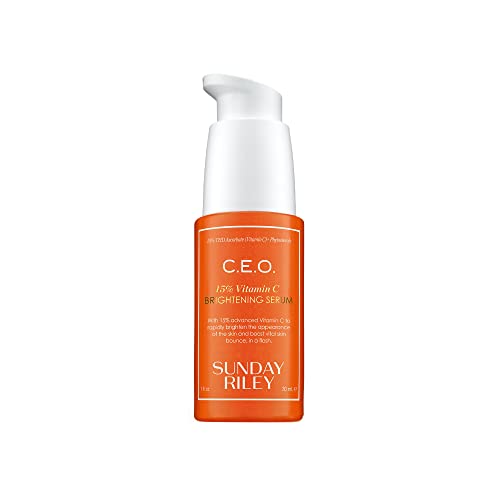
Sunday Riley C.E.O. 15% Vitamin C Serum Review: Quick Summary
Product type: Topical facial serum
Main purpose: Brightening, antioxidant support, visible firmness
Best for: Dullness and uneven-looking tone
May not suit: Fragrance-sensitive or very reactive skin
Key ingredients or features: 15% THD ascorbate, phytosterols, squalane
Return policy or guarantee: 30-day direct-purchase guarantee
Overall rating: 4.0/5
What Is Sunday Riley C.E.O. 15% Vitamin C Serum?
Sunday Riley C.E.O. 15% Vitamin C Brightening Serum is a leave-on facial serum designed to improve the appearance of dullness, discoloration, fine lines, and loss of firmness. The formula uses tetrahexyldecyl ascorbate rather than pure L-ascorbic acid, according to the official product page.
It is intended for morning and/or evening use. The manufacturer recommends two pumps on clean skin, with morning use specifically positioned around antioxidant protection and a brighter-looking complexion. These directions appear in the brand’s usage information.
The differentiator is the combination of a stable oil-soluble vitamin C derivative with squalane, phytosterols, jojoba esters, and a humectant system. I see a more cushioning approach than the lightweight, acidic formulas commonly built around L-ascorbic acid.
What Does Sunday Riley C.E.O. 15% Vitamin C Serum Claim to Do?
The company’s major claims include:
- Brighten dull-looking skin
- Improve dark spots and discoloration
- Support firmer-looking skin
- Improve the appearance of lines and wrinkles
- Provide antioxidant benefits
- Support the skin barrier
- Reduce the visible signs of sensitivity
These claims are reasonably specific, but some are easier to verify than others. Brightness and discoloration can be measured, while phrases such as “youthful skin bounce” are much less precise. The wording comes from the brand’s current product information.
The manufacturer also reports a 30-person clinical study showing improvement in brightness and firmness. That is useful product-specific evidence, but I would not treat it as equivalent to a large independent randomized trial. The reported study details are provided in the brand’s clinical information.
How Is Sunday Riley C.E.O. 15% Vitamin C Serum Supposed to Work?
Vitamin C can act as an antioxidant and can influence pathways involved in pigmentation and collagen production. A peer-reviewed topical vitamin C review describes these mechanisms while emphasizing that clinical outcomes depend heavily on formulation, stability, concentration, and skin penetration.
THD ascorbate is designed to be more oil-soluble and chemically stable than L-ascorbic acid. That makes its formulation plausible, but stability and skin penetration do not automatically prove superior visible results.
My view is that the mechanism is biologically credible, while the strongest evidence still comes from broader vitamin C research rather than this exact finished product.
Sunday Riley C.E.O. 15% Vitamin C Serum Ingredients at a Glance
The current ingredient list is published by Sunday Riley, and the reviewed formula contains 15% tetrahexyldecyl ascorbate as its headline vitamin C ingredient. The brand’s current ingredient information provides the complete list.
Main ingredients:
- Tetrahexyldecyl Ascorbate: Vitamin C derivative
- Glycine Soja (Soybean) Sterols: Barrier-supporting phytosterols
- Saccharide Isomerate: Humectant and moisture-support ingredient
- Squalane: Emollient
- Tocopherol: Vitamin E antioxidant
- Glycolic Acid: Alpha-hydroxy acid
Complete ingredient list:
- Water/Eau/Aqua
- Tetrahexyldecyl Ascorbate
- Squalane
- Polyglyceryl-6 Distearate
- PEG-8 Beeswax
- PPG-12/SMDI Copolymer
- Glycine Soja (Soybean) Sterols
- Sodium Phytate
- Tocopherol
- Acetamidoethoxyethanol
- Hydroxyethyl Acrylate/Sodium Acryloyldimethyl Taurate Copolymer
- Sodium Acrylate/Sodium Acryloyldimethyl Taurate Copolymer
- Jojoba Esters
- Glycolic Acid
- Caprylyl Glycol
- Cetyl Alcohol
- Polyglyceryl-3 Beeswax
- Chlorphenesin
- Glycerin
- Polysorbate 60
- Sorbitan Isostearate
- Saccharide Isomerate
- Citrus Aurantium Dulcis (Orange) Peel Oil
- Citrus Tangerina (Tangerine) Peel Oil
- Linalool
- Limonene
- Phenoxyethanol
Sunday Riley C.E.O. 15% Vitamin C Serum Ingredients: Detailed Analysis
The formula’s strongest point is that its main vitamin C ingredient is clearly identified and its claimed percentage is disclosed. The supporting ingredients also suggest that the brand was aiming for a moisturizing, non-acidic serum rather than an aggressively exfoliating vitamin C treatment.
Tetrahexyldecyl Ascorbate
THD ascorbate is a fat-soluble vitamin C derivative developed to improve stability and skin delivery. Reviews of topical vitamin C derivatives describe it as promising, but clinical evidence is much smaller than the enormous body of research surrounding vitamin C generally. The topical vitamin C review discusses these evidence limitations.
There is some meaningful human evidence. A small double-blind study used a formulation containing 7% THD ascorbate alongside 10% L-ascorbic acid and found improved photoaging measures, but that was not the same formula reviewed here. The THD clinical study is available through PubMed.
Sunday Riley states that this serum contains 15% THD ascorbate. That is useful transparency. However, the exact amount of several supporting actives is not disclosed, so we cannot establish whether those ingredients match clinically studied concentrations.
Glycine Soja (Soybean) Sterols
Phytosterols are plant-derived compounds that can help support the skin barrier and improve the feel of dry or compromised skin. Their inclusion makes sense in a serum built around a potentially active brightening ingredient.
The company specifically highlights phytosterols for visible redness and barrier support. I find the idea reasonable, although the evidence for this particular phytosterol system is less persuasive than the evidence for topical vitamin C itself.
Saccharide Isomerate
Saccharide isomerate is a carbohydrate-based humectant, meaning it helps attract and retain water near the skin surface. The brand positions it as a moisturizing ingredient that supports a smoother-looking complexion in its product information.
This is mainly a supporting ingredient rather than the reason I would buy the serum. Its role is practical: hydration can make skin look temporarily plumper and smoother, which can complement a brightening routine.
Other Ingredients
- Squalane: Emollient that softens skin and reduces moisture loss.
- Polyglyceryl-6 Distearate: Emulsifier that helps stabilize oil and water phases.
- PEG-8 Beeswax: Texture and consistency agent.
- PPG-12/SMDI Copolymer: Film-forming stabilizer.
- Sodium Phytate: Chelating agent that helps formula stability.
- Tocopherol: Vitamin E antioxidant that also supports formula stability.
- Acetamidoethoxyethanol: Conditioning ingredient.
- Hydroxyethyl Acrylate/Sodium Acryloyldimethyl Taurate Copolymer: Thickener and stabilizer.
- Sodium Acrylate/Sodium Acryloyldimethyl Taurate Copolymer: Texture and stabilizing agent.
- Jojoba Esters: Emollient that improves softness and slip.
- Glycolic Acid: Exfoliating alpha-hydroxy acid.
- Caprylyl Glycol: Humectant and preservative-support ingredient.
- Cetyl Alcohol: Fatty alcohol used for texture and emollience.
- Polyglyceryl-3 Beeswax: Emulsifier and texture agent.
- Chlorphenesin: Preservative.
- Glycerin: Humectant that attracts water.
- Polysorbate 60: Emulsifier.
- Sorbitan Isostearate: Emulsifier and stabilizer.
- Citrus Aurantium Dulcis Peel Oil: Orange peel oil providing scent and aromatic compounds.
- Citrus Tangerina Peel Oil: Tangerine peel oil providing scent and aromatic compounds.
- Linalool: Fragrance component with sensitization potential.
- Limonene: Fragrance component with sensitization potential.
- Phenoxyethanol: Preservative used widely in cosmetics.
The citrus oils and fragrance allergens deserve particular attention for reactive skin. DermNet’s guidance on limonene and linalool explains that oxidized forms can cause allergic contact dermatitis in sensitized people.
Does Sunday Riley C.E.O. 15% Vitamin C Serum Have Effective Ingredient Amounts?
The big advantage is that the company discloses 15% THD ascorbate, rather than hiding the headline ingredient inside a proprietary blend. The amounts of phytosterols, squalane, glycolic acid, saccharide isomerate, and tocopherol are not disclosed.
That makes the formula partly transparent rather than fully transparent. I would have more confidence in claims involving those secondary ingredients if their concentrations or finished-product testing were publicly available.
How Do You Use Sunday Riley C.E.O. 15% Vitamin C Serum?
Sunday Riley recommends applying two pumps to clean skin in the morning and/or at night. Morning use is promoted for antioxidant support and a brighter appearance, while nighttime use is positioned around brightening and firmness, according to the official directions.
The serum is designed as a leave-on product. Because the formula includes glycolic acid and fragrant citrus components, I would be more cautious about introducing it alongside several other active products, particularly if your skin is easily irritated.
What Results Can You Realistically Expect?
The most realistic goal is a brighter, more even-looking complexion with gradual improvement in the appearance of discoloration. Research supports topical vitamin C for pigmentation and photoaging, but systematic reviews also emphasize that clinical evidence remains limited and formulation-specific. A relevant systematic review reaches a similar conclusion.
The manufacturer reports brighter-looking skin after one week and statistically significant firmness improvement after four weeks in its 30-person study. Those findings are encouraging, but the study size and limited published detail make them better viewed as supportive evidence than definitive proof.
I would not expect the serum to erase established dark spots or dramatically change facial structure. Continued use is likely to matter more than a short trial.
Ease of Use and Overall User Experience
The formula appears designed to feel more moisturizing than a watery acidic vitamin C serum. Squalane, jojoba esters, beeswax-derived ingredients, and fatty alcohols give it a richer formulation profile. Consumer feedback supports that impression, although experiences vary.
On Ulta, reviewers frequently praise visible brightness and more even-looking skin, while repeated complaints include heaviness, breakouts, irritation, scent, and limited improvement in dark spots. These observations come from Ulta customer feedback, not scientific testing.
I also found Reddit users describing the serum as creamy and faintly citrus-scented, while others have mentioned an oily or tacky finish. These are subjective reports, not controlled measurements, but the consistency of those observations makes them useful for setting expectations.
Safety, Side Effects, and Precautions
The most relevant concerns are irritation and contact allergy rather than serious systemic toxicity. The formula includes glycolic acid plus orange and tangerine peel oils, linalool, and limonene. Sensitized users can develop allergic contact dermatitis from oxidized fragrance components, as explained in DermNet’s safety guidance.
I would be especially cautious if you already know that fragranced skincare irritates your skin. A small-area patch test is sensible before wider use. Anyone with persistent irritation, swelling, or a suspected allergic reaction should stop using the product and seek appropriate medical advice.
Product Quality and Manufacturing Transparency
Sunday Riley publishes the complete ingredient list, identifies the 15% THD ascorbate concentration, and provides detailed usage information. The brand also says it is certified cruelty-free by PETA and Leaping Bunny, with details on its cruelty-free information page.
My main transparency reservation is independent verification. I could not verify a publicly available batch certificate of analysis or an independent clinical evaluation of this exact serum. The manufacturer does provide its own 30-person clinical results, but those deserve appropriate weight rather than being treated as conclusive evidence.
Customer Reviews and Common Complaints
Ulta currently shows a 4.5-star rating from hundreds of reviews, with 88% of respondents saying they would recommend the product. Brightness, even-looking tone, and perceived improvement in post-acne discoloration are recurring positives in the Ulta reviews.
The recurring negatives are also useful: some reviewers report breakouts, a heavy or oily feel, irritation, scent concerns, and disappointment with dark-spot improvement. Reddit discussions similarly contain strong praise but also complaints about cost and finish.
Reviews cannot establish effectiveness. They can, however, reveal practical patterns that controlled trials often don’t capture. I would treat these reports as useful context rather than proof.
Sunday Riley C.E.O. 15% Vitamin C Serum Pros and Cons
- Clearly disclosed 15% THD ascorbate
- Complete current ingredient list
- Useful moisturizing support
- Product-specific clinical data
- Verified cruelty-free certifications
- Supporting concentrations remain undisclosed
- Fragrance allergens may irritate
Who Should Consider Sunday Riley C.E.O. 15% Vitamin C Serum?
This serum makes the most sense for consumers who want a vitamin C derivative in a more moisturizing format.
- People targeting dull-looking skin.
- Users interested in uneven-looking tone.
- People who prefer THD ascorbate.
- Users wanting antioxidant-focused skincare.
- Those comfortable with richer serum textures.
Who Should Avoid Sunday Riley C.E.O. 15% Vitamin C Serum?
I would be cautious about it for people who know their skin reacts poorly to fragranced ingredients or layered actives.
- People allergic to limonene or linalool.
- Those with highly reactive skin.
- Anyone irritated by citrus oils.
- People seeking a fragrance-free sensory profile.
- Buyers wanting fully disclosed active concentrations.
- Younger users should involve a parent or guardian and, when needed, a dermatologist before adding strong active skincare.
Is Sunday Riley C.E.O. 15% Vitamin C Serum Good Value for Money?
The value proposition depends on what you’re paying for. This isn’t simply a container of vitamin C. You’re paying for a stable derivative, a moisturizing vehicle, premium packaging, brand formulation work, and a documented product-specific study.
From a consumer perspective, the biggest issue is that the secondary active ingredients aren’t quantified. That makes it harder to compare the formula scientifically with less expensive products that disclose more concentration information.
The return policy does help reduce purchase risk when buying directly. Sunday Riley says customers can contact the company within 30 days of delivery for a prepaid return and potential full refund or credit, subject to its inspection rules. Retail purchases follow the retailer’s own policy. The company’s FAQ and return information outlines those conditions.
Sunday Riley C.E.O. 15% Vitamin C Serum: My Verdict
I consider this worth considering, particularly for someone who wants a stable vitamin C derivative in a richer, more moisturizing serum. The formula is thoughtfully constructed, the main vitamin C concentration is disclosed, and there is some product-specific clinical evidence.
The evidence becomes less impressive when you look beyond those strengths. The manufacturer’s clinical study is small, independent evidence for this exact serum is limited, and several supporting ingredients are unquantified. The citrus oils, linalool, and limonene also make it less appealing for people who need a genuinely low-sensitizer routine.
For me, the product earns its rating because the strengths are real without requiring exaggerated claims. I would choose it for cosmetic brightening and antioxidant support, but I would not treat its “15%” label as proof that it must outperform every other vitamin C serum.
Disclaimer
This review is based on current product information, ingredient analysis, published research, manufacturer statements, and consumer feedback discussed above. Results vary between individuals. This article is educational and does not replace personalized medical advice, diagnosis, or treatment.