
Age spots can make your skin tone look less even, especially after years of sun exposure. The good news is that the right skincare ingredients can gradually make these spots less noticeable. Still, results usually take time, often several weeks or months with regular use.
Finding the right cream is where things can get confusing. There are plenty of products claiming to brighten skin, fade dark spots, and restore a more youthful look. However, some formulas are far more suited to age spots than others, while certain products focus mainly on hydration or firmness.
That is why we researched the category carefully, checked current formulas, looked at ingredient evidence, and compared the options that stood out most. Our goal is to help you see what each cream does well, where it falls short, and which one makes the most sense for your skin.
How We Selected the Best Creams for Age Spots
We started by looking closely at what each product actually contains. Since age spots are a form of uneven pigmentation, we gave more attention to formulas containing ingredients with credible evidence for improving dark spots, sun damage, or uneven skin tone.
At the same time, we considered more than brightening ingredients alone. A cream also needs to be comfortable enough to use regularly, suitable for the intended skin type, and clear about how it should be used. We also separated ingredient research from claims about the complete product.
- Pigment-focused ingredients: We looked for ingredients with meaningful evidence for helping improve uneven tone and visible dark spots.
- Skin tolerance: A formula is far less useful if irritation makes it difficult for you to use consistently.
- Supporting ingredients: Hydrating and barrier-friendly ingredients can make active formulas easier and more comfortable to use.
- Quality of evidence: We paid attention to whether claims were supported by independent research or mainly by manufacturer testing.
- Everyday usability: Texture, application, and compatibility with a normal skincare routine can make a big difference.
- Transparency: Clear ingredient lists and practical directions make it easier for you to understand exactly what you are using.
Each cream below earned its place for a slightly different reason. So, rather than looking for one universal winner, focus on the option that best matches your skin and priorities.
Best Creams for Age Spots in 2026
Some of these creams target pigmentation more directly, while others make more sense if you also want help with dryness, wrinkles, or loss of firmness. Here is how they compare.
1. SkinMedica Retinol Complex 0.25

SkinMedica Retinol Complex 0.25 is one of our strongest choices if you are new to retinol and want to tackle age spots while also improving rough texture and fine lines. Its official formula includes retinol, niacinamide, squalane, and several supportive ingredients.
The combination makes a lot of sense for sun-damaged skin. Retinol has meaningful clinical evidence for improving visible photoaging, while niacinamide has also shown benefits for hyperpigmentation. Together, they give this formula a stronger connection to age spots than a standard moisturizer.
We also like that the 0.25 strength offers a gentler entry point into retinol. The formula includes emollients and squalane, which can help keep skin feeling more comfortable. Even so, redness, dryness, and peeling can still happen while your skin adjusts.
That is worth keeping in mind because more irritation does not mean better results. With retinol, steady and tolerable use usually makes far more sense than pushing your skin too quickly and then having to stop.
The manufacturer directions recommend one pump in the evening after cleansing and toning, followed by moisturizer. If you are new to retinol, start slowly and increase use as tolerated. Daily sunscreen is especially important while working on sun-related pigmentation.
Who should skip it:
- Anyone who is pregnant, breastfeeding, or planning pregnancy, based on SkinMedica’s warning.
- People whose skin does not tolerate retinoids well.
- Anyone unwilling to use sunscreen consistently.
2. Clarins Super Restorative Day Cream
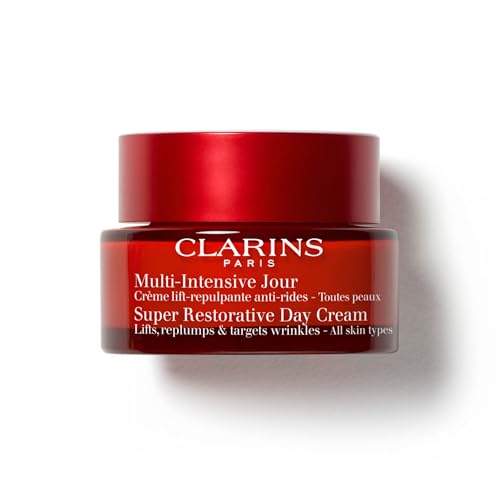
Clarins Super Restorative Day Cream is a better match if your age spots come alongside dryness, loss of softness, and other visible signs of mature skin. Its current formula includes ascorbyl glucoside, squalane, shea butter, harungana, and several moisturizing ingredients.
For uneven pigmentation, the vitamin C derivative is one of the most relevant ingredients. Topical vitamin C has human research supporting improvements in photodamaged skin. However, the exact results always depend on the form of vitamin C, its concentration, and the rest of the formula.
Where this cream really stands out is in comfort and moisture. It is clearly designed as a richer daily moisturizer for mature skin rather than a highly targeted dark spot treatment. That can make it more appealing if dryness bothers you just as much as uneven tone.
Because of that, we would not put it ahead of retinol or more focused brightening formulas when fading age spots is your only priority. Its real strength is helping address several mature-skin concerns in one step.
One drawback is fragrance, which appears in the current formula and may not suit sensitive skin. Clarins recommends applying the cream every morning to clean face and neck. Since it does not replace sunscreen, you should still follow with proper sun protection.
Who should skip it:
- People who know that fragranced skincare irritates their skin.
- Anyone mainly looking for an intensive dark spot treatment.
- Very oily skin that tends to dislike richer creams.
3. innisfree Green Tea Enzyme Vitamin C Brightening Cream

innisfree Green Tea Enzyme Vitamin C Brightening Cream is an appealing option if you want something lighter and more straightforward. Its official ingredient list includes niacinamide, several forms of vitamin C, ferulic acid, squalane, and multiple forms of hyaluronic acid.
We like this combination because it brings brightening and hydration together. Niacinamide has shown benefits for hyperpigmentation in human studies, while some vitamin C derivatives also have research supporting improvements in uneven pigmentation.
The texture is another strong point. innisfree describes it as a lightweight gel cream that absorbs without leaving a sticky finish. It is also listed as fragrance-free, which gives it an edge for people who prefer to avoid added scent in facial skincare.
This is also one of the easier options to fit into a simple routine. You are getting hydration and several brightening ingredients in the same moisturizer. However, the brand does not clearly disclose the concentrations of the main brightening ingredients, so it is difficult to judge their exact potency.
According to the official directions, you can apply a dime-sized amount after serum or toner, morning and evening. If you use it during the day, follow with sunscreen to help prevent existing pigmentation from becoming darker.
Who should skip it:
- Anyone who wants clearly disclosed active ingredient percentages.
- People with very dry skin who prefer richer, heavier moisturizers.
- Anyone who knows they react badly to niacinamide or vitamin C derivatives.
4. iS CLINICAL Brightening Complex

iS CLINICAL Brightening Complex is one of the more targeted options on our list. It makes the most sense if uneven pigmentation is your main concern and you specifically want a hydroquinone-free formula. Its current formula includes alpha-arbutin, tetrahexyldecyl ascorbate, licorice root, squalane, hyaluronic acid, willow bark, and other botanical ingredients.
We like that the formula approaches discoloration from several directions instead of relying on a single brightening ingredient. Alpha-arbutin-containing regimens have shown promise in clinical research, while the vitamin C derivative adds another ingredient with relevance to uneven tone.
At the same time, we would not treat every botanical in the formula as equally well proven. The brand also does not disclose the percentages of its main pigment-focused ingredients, which makes it difficult to compare its likely strength with other treatments.
Still, the overall formula is more focused on discoloration than a typical anti-aging moisturizer. The inclusion of squalane and hyaluronic acid also gives it some moisturizing support, which may make regular use easier.
One drawback is that fragrance appears in the formula. Willow bark and other active components may also be less comfortable for very reactive skin. The manufacturer directions say to apply a small amount to clean skin over areas with pigmentation irregularities.
Who should skip it:
- People who prefer completely fragrance-free skincare.
- Very reactive skin that struggles with multi-active formulas.
- Anyone who wants exact percentages for the main brightening ingredients.
5. MiamiMD Age-Defying Lift & Firm Cream

MiamiMD Age-Defying Lift & Firm Cream is a little different from the other options here. We think it makes the most sense if age spots are only one part of a broader concern that includes fine lines, dryness, and loss of firmness.
The manufacturer page highlights Progeline, Matrixyl 3000, and Argireline peptides. These ingredients are more closely connected with wrinkles and firmness than with pigmentation. Argireline, for example, has some human evidence supporting improvement in wrinkle appearance.
That distinction matters. If fading age spots is your main goal, this is not the most targeted formula in our selection. However, if you are mainly looking for a broader anti-aging cream and also want your complexion to look more refreshed, it may fit your priorities better.
We also appreciate that the manufacturer provides clear application guidance and positions the cream for different skin types. Still, compared with formulas built around retinol, niacinamide, vitamin C, or alpha-arbutin, the case for specifically targeting age spots is less convincing.
The official directions recommend applying a quarter-sized amount to clean skin and allowing it to absorb, with morning and evening use suggested. You will still need daily sunscreen because the cream itself does not replace UV protection.
Who should skip it:
- Anyone whose main priority is fading stubborn age spots.
- People who want a formula built around well-known pigment-focused ingredients.
- Anyone who prefers stronger independent evidence for the finished product.
Final Thoughts
When choosing a cream for age spots, we would focus first on the ingredients, then on how well the formula suits your skin. Retinol, niacinamide, vitamin C, and other pigment-focused ingredients can all be useful, but only if you can use the product comfortably and consistently.
Just as importantly, do not overlook sunscreen. Sun exposure can make existing spots darker and encourage new ones to appear. Choose a formula that fits your skin type, sensitivity, routine, and budget, and give it time to work. If a spot looks unusual or begins changing, have it checked before trying to fade it.