
Dark spots can be frustrating, especially when they linger long after acne, sun exposure, or irritation has settled. They can make your skin tone look uneven and leave you searching for a treatment that actually helps without making your skin feel worse.
The tricky part is that dark spot removers work in different ways. Some use exfoliating acids, while others rely on ingredients that help slow excess pigment production. And if a formula is too harsh for your skin, the irritation can sometimes make discoloration even harder to manage.
To make things easier, we researched current formulas, manufacturer information, clinical evidence, and the practical differences between leading options. We then narrowed the field to five standouts that offer different strengths, so you can focus on the one that best fits your skin and concerns.
How We Selected the Best Facial Dark Spot Removers
We started by looking closely at what each product actually contains. Rather than relying on brightening claims alone, we gave more weight to ingredients with credible evidence for helping with visible discoloration, uneven tone, or post-inflammatory marks.
We also considered how practical each serum is to use over time. Dark spots rarely disappear overnight, so tolerance matters. A formula that repeatedly leaves your skin irritated may be difficult to use consistently, no matter how impressive its ingredient list looks.
- Pigment-targeting ingredients: We favored formulas containing ingredients backed by human research or useful product-specific evidence.
- Type of discoloration: We considered whether each product is better suited to post-acne marks, sun spots, age spots, or broader uneven tone.
- Irritation potential: Acids, retinoids, fragrance, alcohol, and essential oils all mattered because they can affect how comfortably you use a product.
- Formula transparency: Clear ingredient lists and directions make it easier to understand exactly what you are putting on your skin.
- Practical texture: We considered how easily each serum should fit into a regular skincare routine.
- Evidence quality: We separated independent ingredient research from manufacturer-funded testing of the finished product.
Each of the five products below has a clear reason for being here. More importantly, they are not interchangeable, so the best choice depends on what your skin needs most.
Best Facial Dark Spot Removers
These products take different routes to tackling discoloration. Some focus on exfoliation, others on pigment production, while a few combine several approaches in one formula.
1. Murad Rapid Dark Spot Correcting Serum
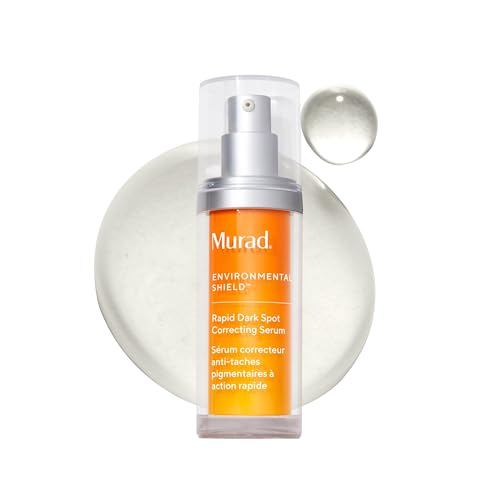
Murad Rapid Dark Spot Correcting Serum is a strong option if you are dealing with several types of discoloration at once, including post-acne marks, sun spots, and uneven tone. According to the official product details, it suits balanced, oily, combination, and dry skin.
Its formula combines tranexamic acid, glycolic acid, and 4-ethylresorcinol. Tranexamic acid has encouraging clinical evidence for hyperpigmentation, while hydroxy acids have useful support in a systematic review of treatments for post-inflammatory pigmentation.
What we like most is that the formula approaches discoloration from more than one angle. Glycolic acid helps remove dull surface cells, while the other actives focus more directly on uneven pigmentation. Murad also reports visible dark-spot improvement in its own clinical testing.
That said, there is a tradeoff. The current ingredient list places alcohol fairly high and also includes fragrance and citrus oils. Murad describes the texture as a lightweight, watery gel, but sensitive skin may still find the formula a little too active.
Murad recommends applying it morning and evening to the face, neck, and chest, followed by moisturizer and daytime sunscreen. We would treat sunscreen as essential here because consistent sun protection is strongly supported in the dermatology evidence for managing post-inflammatory pigmentation.
Notes of caution:
- Consider another option if your skin reacts easily to glycolic acid, alcohol, fragrance, or citrus oils.
- Be cautious if you already use several exfoliating or retinoid products.
- Stop using it if persistent burning, redness, or irritation develops.
2. La Roche-Posay Mela B3 Dark Spot Serum
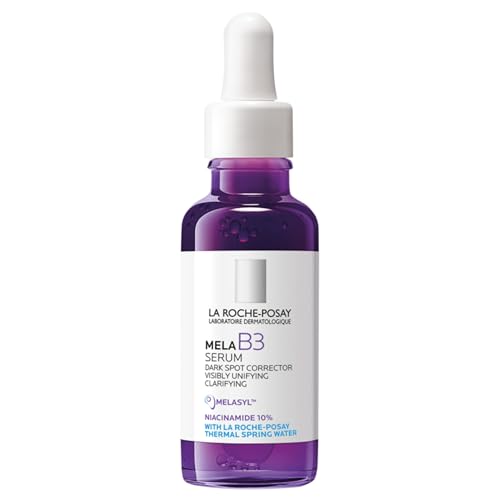
La Roche-Posay Mela B3 Serum is one of the more interesting options for stubborn discoloration, including post-acne marks, sun spots, age spots, and general uneven tone. It may appeal especially if you want a pigment-focused serum without relying mainly on exfoliating acids.
The key ingredient is Melasyl, also known as 2-mercaptonicotinoyl glycine, paired with niacinamide. Human clinical research supports 2-MNG for reducing pigmentation, while niacinamide research suggests it can help reduce visible hyperpigmentation by limiting pigment transfer within the skin.
That pairing is what makes the serum stand out. The two ingredients work differently, which gives the formula a more rounded approach to discoloration. Research on the finished Mela B3 serum has also reported improvement in post-inflammatory pigmentation, although some of that work involves researchers affiliated with the manufacturer.
The official ingredient list also includes glycerin, sodium hyaluronate, dimethicone, and capryloyl salicylic acid. So, there is some hydration and gentle resurfacing support built in. However, fragrance and colorant are also present.
La Roche-Posay recommends three to four drops morning and evening after cleansing, applied to the face and neck while avoiding the eye area. The manufacturer directions also stress daytime sunscreen, which is especially important when you are trying to keep new discoloration from developing.
Notes of caution:
- Choose a fragrance-free option if fragrance often irritates your skin.
- Avoid applying it around the eyes.
- Stop using it if you notice ongoing stinging, redness, or irritation.
3. Caudalie Vinoperfect Brightening Dark Spot Serum

Caudalie Vinoperfect Brightening Dark Spot Serum is a gentler-looking option for people who want to work on uneven tone without building their routine around retinol or strong exfoliating acids. Its more moisturizing base may also feel comfortable if your skin leans normal to dry.
The star ingredient is Viniferine, a patented vine-sap-derived ingredient listed as palmitoyl grapevine shoot extract. Caudalie says it can interfere with tyrosinase activity, a process involved in pigment formation. However, independent human research on Viniferine is still more limited than for several established brightening ingredients.
The formula is not only about pigmentation. It also contains glycerin, olive-derived squalane, and bisabolol, which give it a softer, more moisturizing profile. That can be useful if you want to brighten your skin without piling several potentially irritating actives into the same routine.
Caudalie reports improvement in the appearance of dark spots with consistent use. Still, much of the readily available product-specific evidence comes directly from the brand, so we would keep expectations realistic. The current formula also contains fragrance, which may matter if your skin is sensitive.
The manufacturer recommends applying the serum morning and evening to the face, neck, and décolleté, then following with moisturizer. Daily sunscreen is also important because ongoing UV exposure can keep existing discoloration visible and encourage new spots to form.
Notes of caution:
- Look elsewhere if you want the strongest independent evidence behind the main brightening ingredient.
- Choose a fragrance-free serum if fragrance tends to bother your skin.
- Consider another formula if you specifically prefer retinoid, tranexamic-acid, or exfoliating-acid treatments.
4. StriVectin Super-C Retinol Brighten & Correct Vitamin C Serum

StriVectin Super-C Retinol Brighten & Correct Serum makes the most sense if dark spots are only one part of what you want to improve. It also targets dullness, uneven texture, fine lines, and other visible signs of photoaging.
Its current formula combines sodium ascorbyl phosphate and ascorbyl glucoside with retinol. Topical vitamin C has useful clinical evidence for pigmentation and photoaging, while retinoids are well established for improving uneven tone and texture.
That broader approach is the main reason this product stands out. Instead of treating dark spots in isolation, it gives you several skin-renewing ingredients in one serum. However, research on individual ingredients does not guarantee identical results from the finished product.
StriVectin recommends shaking the bottle and applying one to three drops to affected areas morning and evening before moisturizer. The formula also contains fragrance and citrus oils, and the retinol adds another possible source of irritation, particularly if your skin is already dry or sensitive.
Retinol can cause dryness, peeling, and redness when your skin is still adjusting. For that reason, we would introduce this type of formula carefully rather than rushing into frequent use. Dermatologists also advise avoiding retinoids during pregnancy in their retinoid guidance.
Notes of caution:
- Consider another serum if retinoids have caused significant irritation for you before.
- Choose a fragrance-free product if your skin reacts to fragrance.
- Avoid retinoid skincare during pregnancy.
5. Dermalogica PowerBright Dark Spot Serum

Dermalogica PowerBright Dark Spot Serum is a good fit if you want a morning-focused formula built around niacinamide and hexylresorcinol rather than retinol. It is aimed at uneven tone, post-inflammatory marks, sun-related spots, and dullness.
Niacinamide appears high on the official ingredient list, while hexylresorcinol provides another pigment-focused ingredient. Human studies support niacinamide for visible hyperpigmentation, while clinical evidence also suggests hexylresorcinol can help improve pigmentation.
We like that the two ingredients take somewhat different approaches instead of simply repeating the same function. Still, Dermalogica does not publicly state the exact concentration of hexylresorcinol, so we cannot assume that results from studies using specific amounts will transfer directly to this serum.
The formula also contains ectoin, sodium hyaluronate crosspolymer, plant oils, and botanical extracts. However, citrus oils, lavender oil, limonene, linalool, and citral are included as well. If your skin tends to react to fragranced botanical formulas, that is worth keeping in mind.
Dermalogica recommends one pump over the face and neck every morning after cleansing and toning, then allowing about a minute for absorption. Its usage directions also fit naturally into a daytime routine followed by broad-spectrum sunscreen.
Notes of caution:
- Consider a simpler formula if essential oils or fragrance ingredients often irritate your skin.
- Look elsewhere if fully disclosed concentrations of key pigmentation actives are important to you.
- Stop using it if you experience repeated stinging, redness, or itching.
Final Thoughts
When choosing a dark spot remover, we suggest paying attention to the cause of your discoloration, the evidence behind the key ingredients, and how much irritation your skin can comfortably handle. Sunscreen matters just as much because new UV exposure can work against the progress you are trying to make.
From there, choose a formula that fits easily into your routine and feels comfortable enough to use consistently. Dark spots usually take time to fade, so patience, steady use, good skin tolerance, and sensible sun protection often matter more than choosing the strongest-sounding serum.